Table of Contents
ToggleRemote work isn’t going anywhere, and neither is the need for a dedicated workspace. But what if there’s no spare room? Enter the closet office, a smart, space-efficient solution that turns underutilized storage into a fully functional work zone. Whether it’s a reach-in closet in a bedroom or a narrow hall closet, a little planning and elbow grease can yield a surprisingly productive workspace. This guide walks through the process from measuring and planning to build-out and design, with honest advice on what works, what doesn’t, and when to call in help.
Key Takeaways
- A closet office transforms underutilized storage into a productive workspace by reclaiming vertical space while creating clear boundaries between work and personal life.
- Standard reach-in closets (24-30 inches deep, 48-72 inches wide) provide sufficient space for a desk, shelving, and equipment, making closet office conversions practical for apartments and small homes.
- Proper planning is essential—measure carefully, assess electrical outlets, check for obstructions like plumbing or HVAC vents, and verify ventilation before beginning construction.
- A functional closet office requires a wall-mounted floating desk, adjustable shelving, dedicated task lighting, multiple outlets for cable management, and a compact office chair that fits the tight space.
- Ergonomics and organization directly impact productivity—ensure proper desk height, monitor placement at eye level, and use wall-mounted storage to prevent clutter accumulation in the confined workspace.
- Design flexibility allows closet office spaces to match any aesthetic, from minimalist Scandinavian to industrial or budget-friendly IKEA hacks, with bold paint or peel-and-stick wallpaper adding personality without overwhelming the small area.
Why a Closet Office Is the Perfect Solution for Small Homes
Closet offices solve multiple problems at once. They reclaim wasted vertical storage, create a dedicated work zone with clear boundaries, and keep work clutter contained. Unlike a desk wedged into a bedroom corner, a closet office can be closed off at the end of the day, literally and psychologically.
The footprint is minimal. A standard reach-in closet measuring 24 to 30 inches deep and 48 to 72 inches wide provides enough space for a desk surface, shelving, and basic equipment. Because the “room” already has walls and (usually) a door, most of the framing and drywall work is done.
This setup works especially well in apartments, condos, and smaller homes where square footage is at a premium. Homeowners with growing families, hybrid workers, or anyone juggling side projects can benefit. It’s also a viable option for renters, provided the modifications are reversible or approved by the landlord.
Planning Your Closet Office Conversion
Before tearing out shelves, take time to plan. Rushed conversions often lead to desks that don’t fit, inadequate lighting, or ventilation issues.
Measuring Your Space and Assessing Feasibility
Start with a tape measure and notepad. Record the closet’s width, depth, and height at multiple points, older homes may have uneven walls. Note the door swing direction and whether it can be removed or replaced with bifold, pocket, or barn-style hardware.
Check for obstructions: heating vents, baseboard heaters, return air grilles, and plumbing or electrical panels. If the closet backs onto a bathroom or kitchen, you may encounter plumbing inside the walls. Don’t assume walls are hollow.
Evaluate the existing electrical setup. Most closets lack outlets, so you’ll need to add at least one 15-amp dedicated circuit for a computer, monitor, and task lighting. Running new electrical typically requires a permit and, depending on local codes, a licensed electrician. Homeowners comfortable with basic wiring can often add a new outlet on an existing circuit, but check the National Electrical Code (NEC) and local amendments first.
Consider ventilation and climate control. Closets without airflow can get stuffy, especially with electronics generating heat. If the closet lacks a return air vent, consider adding a small USB-powered fan or leaving the door open during work hours.
Finally, think about the closet’s current use. If it’s the only bedroom closet, storage will need to be relocated. Many homeowners consolidate clothing into a second closet, add a freestanding wardrobe, or install slim storage solutions elsewhere in the room.
Essential Components for a Functional Closet Office
A closet office needs more than just a desk. Here’s what to include:
Desk or work surface: A wall-mounted floating desk is the most common solution, typically built from ¾-inch plywood or a solid-core door blank cut to size. Standard desk height is 28 to 30 inches from the floor. For adjustability, consider a bracket system that allows height changes.
Shelving: Use the vertical space above the desk for open shelves, cabinets, or cubbies. Adjustable shelf standards (like Elfa or similar) offer flexibility as needs change. Keep shelving depth to 10 to 12 inches to avoid crowding the workspace.
Lighting: Overhead lighting alone won’t cut it. Add a task light (LED desk lamp or under-shelf strip lighting) to reduce eye strain. Warm white LEDs (2700-3000K) create a comfortable work environment without the harshness of cool white bulbs.
Outlets and cable management: Plan for at least two duplex outlets (four receptacles total) to accommodate a laptop, monitor, phone charger, and desk lamp. Use cable raceways or adhesive clips to route cords along the back wall and keep them off the desk surface.
Seating: A compact office chair with a low-profile base works best. Measure the clearance between the desk and the back wall to ensure the chair can roll in and out comfortably.
Ventilation: If the closet feels stuffy during testing, add a small fan or keep the door partially open. Electronics produce heat, and poor airflow can make the space uncomfortable.
Step-by-Step Guide to Building Your Closet Office
Here’s the build sequence for a basic closet office conversion:
-
Remove existing hardware. Take down closet rods, shelves, and brackets. Patch screw holes with spackle or joint compound and sand smooth once dry.
-
Install electrical outlets. If adding new wiring, this step comes first. Turn off power at the breaker, run cable from an existing junction box or panel, install a new-work electrical box, and wire the receptacles. Alternatively, hire a licensed electrician. Testing with a multimeter is essential before closing up walls.
-
Prime and paint. Closets often have bare drywall or old paint. Apply a coat of primer followed by two coats of semi-gloss or satin paint. Lighter colors (whites, soft grays) reflect light and make small spaces feel larger.
-
Build or install the desk. For a floating desk, locate wall studs with a stud finder and mark them. Attach a ledger board (a 1×4 or 1×6) along the back wall, screwed into studs with 3-inch wood screws. Add L-brackets or corner braces on the side walls for additional support. Lay the desk surface on top and secure it with screws from underneath. If the closet is wide enough, consider adding a support leg at the front edge for added stability.
-
Install shelving. Mount shelf standards to studs, then add brackets and shelves. Keep the lowest shelf at least 16 inches above the desk to avoid head bumps.
-
Add lighting. Hardwire an overhead fixture (if the closet doesn’t already have one) or install plug-in LED strips under the lowest shelf. Task lighting should illuminate the desk without glare on screens.
-
Cable management. Drill a 1-inch hole in the desk surface near the back corner for routing cables. Use grommets to finish the hole and prevent snagging. Run cables along the wall with adhesive clips or a raceway.
-
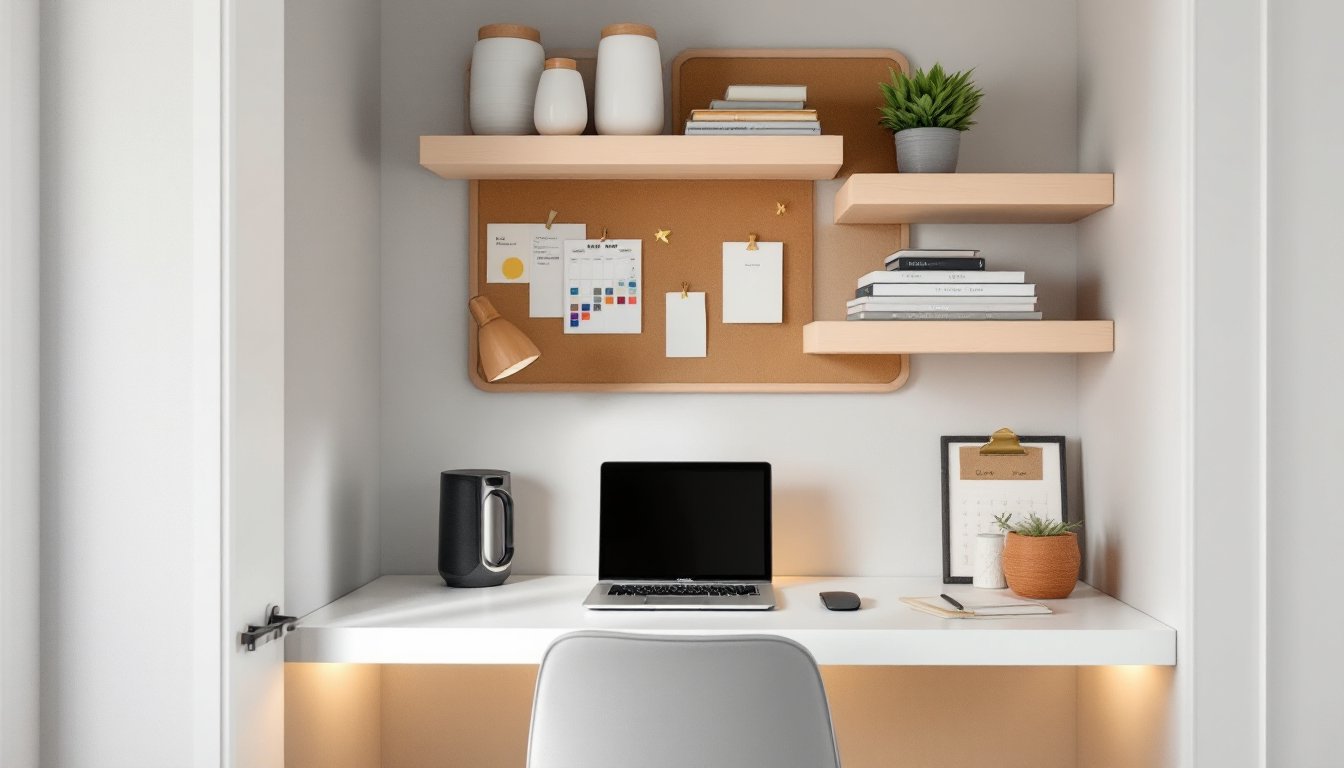
Final touches. Add a small cork board, whiteboard, or pegboard to one side wall for organization. Install hooks for headphones or bags.
Safety notes: Wear safety glasses when cutting wood or drilling. Use a dust mask when sanding. Always turn off power at the breaker before working with electrical wiring.
Design Ideas and Styles for Your Closet Workspace
The design should match the room it’s in, but there’s room for personality.
Minimalist/Scandinavian: White walls, light wood desk, and simple open shelving. Keep decor minimal and functional. This style works well in bedrooms and keeps the workspace from feeling cramped.
Industrial: Pair a butcher block or reclaimed wood desk with black pipe shelving brackets and Edison-bulb lighting. This look suits loft-style apartments or homes with exposed brick.
Traditional/Classic: A walnut or cherry-stained desk, brass hardware, and built-in cabinetry create a more formal look. This works in studies or guest bedrooms where the closet office doubles as a reading nook.
Budget-friendly IKEA hacks: Many DIYers repurpose flat-pack furniture for closet offices. A Kallax shelf unit turned on its side can serve as a desk base, while Lack shelves provide inexpensive overhead storage. Creative modifications for affordable furniture can keep project costs under $200.
Color and wallpaper: A closet office is small enough that bold paint or peel-and-stick wallpaper won’t overwhelm. Accent the back wall to add visual interest without committing to a whole room.
For more ideas on small-space design, apartment dwellers often find inspiration in creative layouts that maximize every inch.
Maximizing Productivity in Your Compact Office
A well-designed closet office can be just as productive as a full-size home office, if it’s set up right.
Ergonomics matter. Desk height, chair adjustment, and monitor placement all affect comfort during long work sessions. The top of the monitor should be at or slightly below eye level, and the keyboard should allow elbows to rest at a 90-degree angle.
Keep it organized. Limited space means clutter accumulates fast. Use drawer organizers, cable ties, and wall-mounted storage to keep supplies accessible but out of sight. A small filing cabinet or rolling cart can tuck under the desk when not in use.
Control distractions. If the closet office is in a bedroom, establish boundaries with household members. A closed door signals focus time. Consider a white noise machine or noise-canceling headphones if the home is loud.
Lighting and ambiance. Natural light is ideal but rare in closets. Layer lighting with overhead, task, and ambient sources to reduce eye strain. Adjustable color temperature bulbs let users shift between cool white for focus and warm white for late-day tasks.
Personalize without overcrowding. A small plant, a favorite print, or a desk accessory adds personality without eating into workspace. Avoid covering the desk with tchotchkes, every item should earn its place.
Homeowners looking to refine other tight areas in the house can apply similar strategies for maximizing functionality in underutilized zones throughout the home. The key is intentional design that prioritizes the task at hand while respecting spatial limits.