Table of Contents
ToggleYour refrigerator runs 24/7, making it one of the biggest energy hogs in your home. An inefficient model can tack on $100 or more to your annual electric bill, money that could fund a weekend project or two. With energy costs climbing and climate concerns front-and-center, choosing an energy-efficient refrigerator isn’t just about being eco-friendly: it’s a practical move that pays dividends over the appliance’s 10-15 year lifespan. This guide breaks down what makes a fridge efficient, which features matter, and how to maximize savings once it’s in your kitchen.
Key Takeaways
- An ENERGY STAR certified energy saving refrigerator uses 400-600 kWh annually, saving $96-144 per year compared to pre-2001 models, paying for itself within 8-12 years.
- Inverter compressors, thicker insulation (2-3 inches), and tight door seals are the core efficiency drivers, with proper maintenance of condenser coils every 6 months keeping your fridge running at peak performance.
- Top-freezer designs are 10-25% more efficient than side-by-side or French door models, and right-sizing your refrigerator (4-6 cubic feet per adult) prevents energy waste from oversizing.
- Placement matters significantly—keeping your refrigerator at least 12 inches from heat sources and maintaining 1-2 inches of ventilation clearance can reduce energy consumption by 5-25%.
- If your refrigerator was built before 2000 or shows signs of excessive compressor cycling, visible frost buildup, or uses 20% more energy than its EnergyGuide label predicts, replacement typically offers better savings than repair costs.
What Makes a Refrigerator Energy Efficient?
Energy efficiency in refrigerators boils down to how much electricity they consume to maintain safe food storage temperatures, typically 35-38°F in the fresh food compartment and 0°F in the freezer.
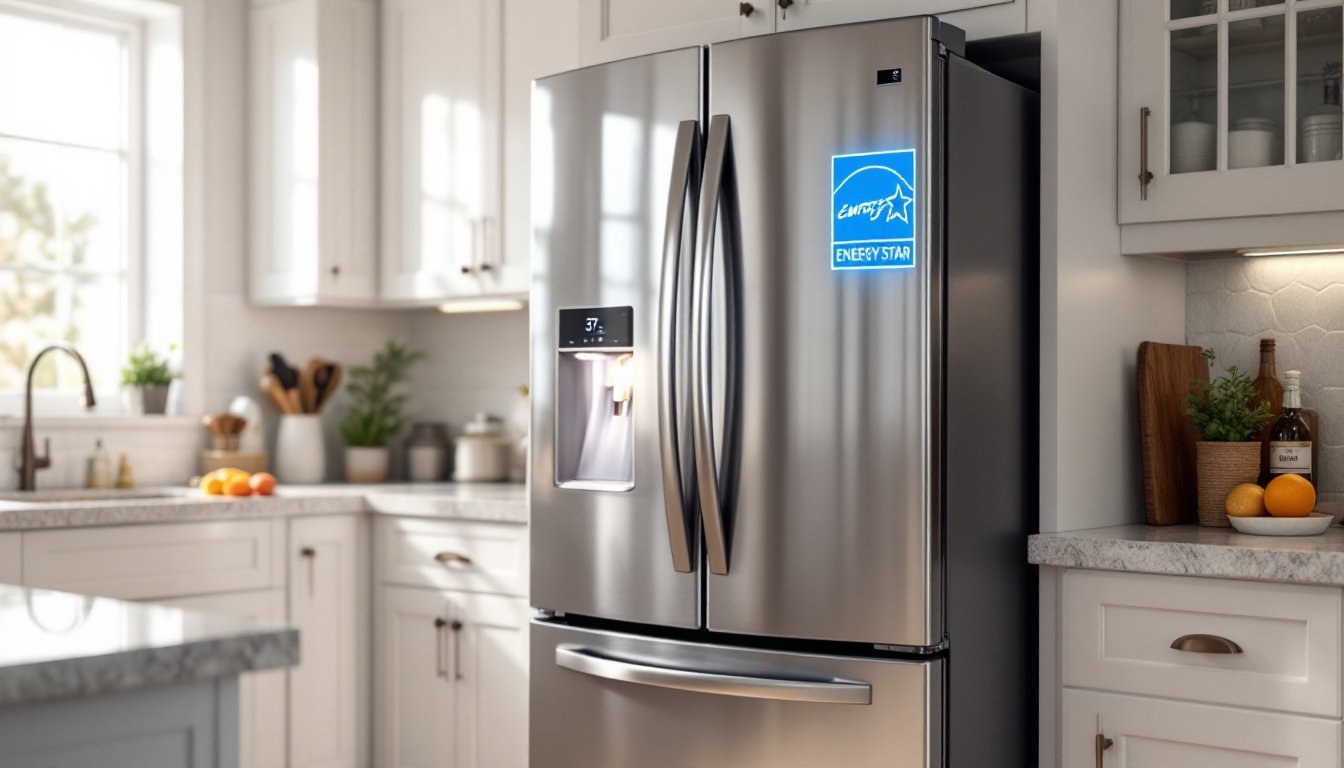
The ENERGY STAR certification is the first benchmark to check. Models bearing this label use at least 15% less energy than the federal minimum standard. They achieve this through better insulation, more efficient compressors, and improved door seals that minimize cold air loss.
Compressor technology plays a huge role. Traditional single-speed compressors run full-blast until the target temperature is hit, then cycle off. Inverter compressors adjust speed continuously, much like cruise control in a car, reducing energy spikes and wear on components. This can cut energy use by 20-30% compared to older designs.
Insulation thickness matters more than most shoppers realize. Look for models with 2-3 inches of polyurethane foam insulation in the walls and door. Thicker insulation keeps cold in and reduces compressor runtime, especially in warm climates or non-climate-controlled garages.
Finally, defrost systems impact efficiency. Manual defrost freezers are the most efficient since they don’t use heating elements to melt frost, but they require regular maintenance. Automatic defrost models use adaptive defrost cycles that monitor usage patterns and defrost only when needed, striking a balance between convenience and energy savings.
Top Features to Look for in an Energy Saving Refrigerator
Not all energy-saving features are created equal. Here’s what actually moves the needle:
Configuration matters. Top-freezer models remain the most energy-efficient design, using roughly 10-25% less energy than side-by-side or French door units. The reason? Less door opening surface area and better cold air retention since cold air naturally sinks. If you’re prioritizing efficiency over aesthetics, go with a top-freezer.
Door seals (gaskets) should feel firm and pliable, not brittle. Modern appliances with high-efficiency ratings often feature magnetic gaskets with multiple contact points. Test the seal by closing the door on a dollar bill, if it pulls out easily, the seal isn’t tight enough.
LED lighting has replaced incandescent bulbs in newer models, using 75% less energy and producing minimal heat that would otherwise force the compressor to work harder.
Vacation mode is an underrated feature. It keeps the freezer running at full capacity while raising the fresh food compartment to a minimal cooling level, cutting energy use by roughly half during extended absences.
Size appropriateness is critical. A 16-18 cubic foot refrigerator suits most households of 2-4 people. Oversizing wastes energy: undersizing forces you to cram items in, blocking airflow and making the compressor work overtime. Calculate 4-6 cubic feet per adult plus 1-2 cubic feet per child as a starting point.
Skip through-the-door ice and water dispensers if energy savings are your priority. They create thermal bridges in the door insulation and add mechanical components that consume power. A simple ice tray costs nothing to run.
How Much Can You Actually Save on Your Energy Bills?
The numbers depend on what you’re replacing and what you’re buying.
An ENERGY STAR certified refrigerator uses about 400-600 kWh per year, depending on size and configuration. At the national average of $0.16 per kWh (as of early 2026), that’s roughly $64-96 annually.
Compare that to a pre-2001 model, which can consume 1,200-1,500 kWh yearly, around $192-240 at the same rate. Upgrading saves $96-144 per year, meaning a new $1,200 energy-efficient model pays for itself in energy savings alone within 8-12 years, well within its expected lifespan.
Regional electricity costs swing these figures significantly. In California or the Northeast, where rates can hit $0.25-0.30 per kWh, the annual savings jump to $150-220. In the Southeast with rates closer to $0.11 per kWh, expect $66-99 in yearly savings.
Utility rebates can accelerate payback. Many power companies offer $50-150 rebates for purchasing ENERGY STAR appliances. Check your utility’s website before shopping, these programs change annually and may have specific model requirements.
Don’t forget the carbon footprint. A 500 kWh/year fridge produces roughly 350 pounds of CO2 annually (based on average U.S. grid mix). Upgrading from a 1,400 kWh model cuts emissions by about 630 pounds per year, equivalent to driving 700 fewer miles in a typical sedan.
Best Placement and Setup Tips for Maximum Efficiency
Where you put the fridge and how you set it up can swing energy use by 10-25%.
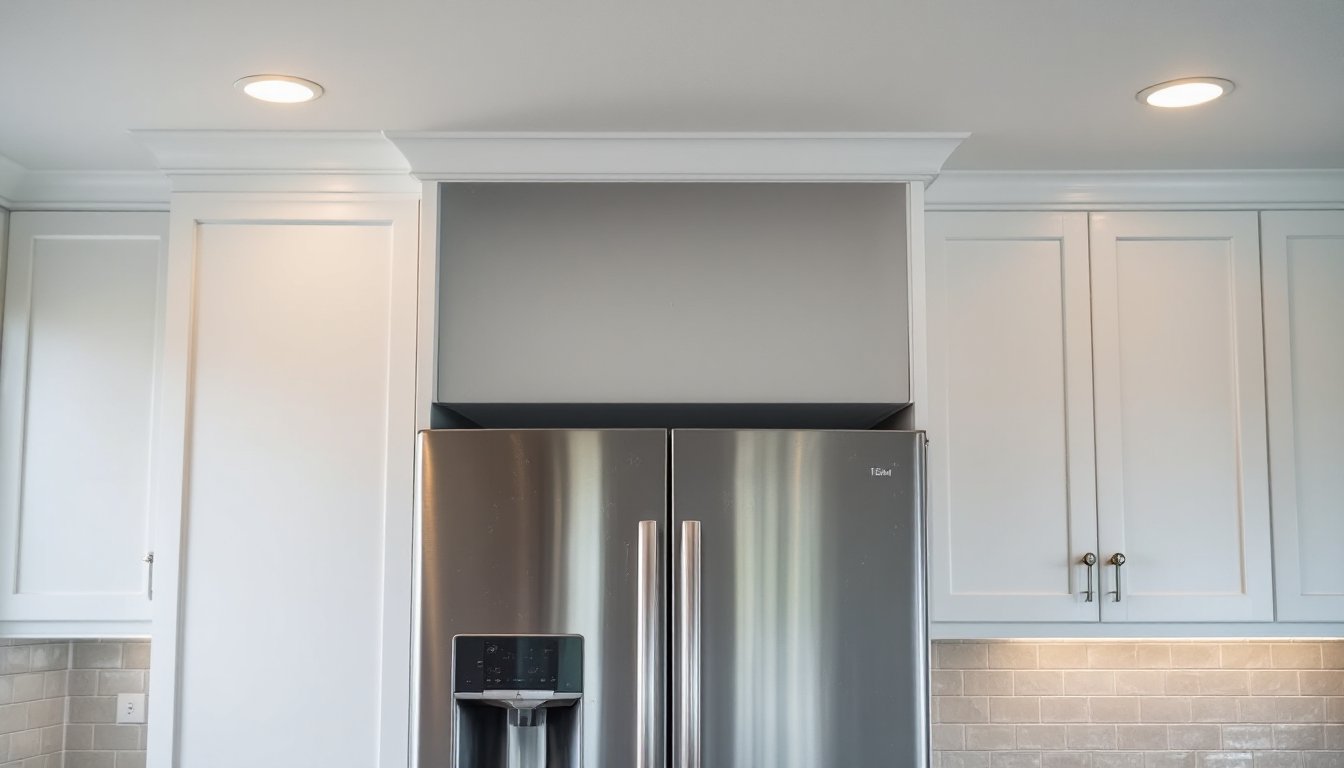
Location rules: Keep the refrigerator away from heat sources. That means at least 12 inches from the range, dishwasher, or any direct sunlight streaming through windows. Every degree of ambient temperature increase forces the compressor to work harder. In modern kitchen layouts where space is tight, consider a heat shield panel between the fridge and range.
Ventilation clearance is non-negotiable. Most manufacturers specify 1 inch on the sides and 2 inches at the back for airflow around the condenser coils. Built-in models have specific requirements, read the installation manual. Blocking airflow can increase energy consumption by 5-10% and shorten compressor life.
Level the unit using the adjustable feet. A refrigerator that tilts forward won’t seal properly, and one that tilts backward may not drain defrost water correctly. Use a torpedo level across the top front-to-back and side-to-side. Aim for perfectly level or a slight tilt back (no more than 1/4 inch over the depth).
Initial temperature settings should be 37°F for the fridge and 0°F for the freezer. Use an appliance thermometer, the built-in dial isn’t always accurate. Setting temps colder than necessary wastes energy. Each degree below the recommended range increases energy use by roughly 5%.
Allow 24 hours after delivery before loading food. This lets the unit reach stable temperature without the thermal load of room-temperature groceries forcing the compressor into overdrive.
For garage installations, check the climate class rating in the manual. Most refrigerators are rated for 50-110°F ambient temps. If your garage drops below freezing or exceeds 110°F in summer, you’ll need a garage-ready model with enhanced climate controls.
Maintenance Habits That Keep Your Refrigerator Running Efficiently
Regular maintenance can keep efficiency from degrading over time. Here’s the practical upkeep schedule:
Clean condenser coils every 6 months. On most models, coils are either behind the kick plate at the bottom or across the back. Use a coil brush (sold at hardware stores for $8-12) and vacuum with a crevice tool. Dust buildup acts like a blanket, forcing the compressor to run longer. This simple task can restore 5-10% efficiency.
Check door seals quarterly. Wipe gaskets with warm soapy water to remove food residue and oils that degrade rubber. If seals show cracks or don’t pass the dollar bill test mentioned earlier, replacements run $50-100 and are DIY-friendly, they typically snap or screw into a retaining channel.
Defrost manual models before frost exceeds 1/4 inch. Frost acts as insulation in the wrong direction, blocking cold transfer. Automatic defrost units shouldn’t show more than a thin layer of frost: if they do, the defrost heater or timer may be failing, call a tech before efficiency tanks.
Keep the interior organized. Overcrowding blocks vents and air circulation, creating warm spots that trigger unnecessary compressor cycles. Leave space around vents (usually at the back wall of the fridge compartment). Conversely, an empty fridge works harder than one that’s 2/3 full, the cold mass of food helps maintain temperature.
Vacuum the drain pan and clear the drain tube annually. The pan sits beneath the unit (usually accessible from the front kick plate). Mold and debris reduce evaporation efficiency and can cause odors. Flush the drain tube with a mixture of 1 tablespoon baking soda in 1 cup warm water using a turkey baster.
Test temperatures monthly. Place a thermometer in a glass of water in the center of the fridge overnight. Adjust the thermostat if temps drift. Temperature inconsistency signals failing components or blocked airflow.
When to Upgrade: Is Your Old Fridge Costing You Money?
Knowing when to replace beats waiting for catastrophic failure.
Age is the first indicator. Refrigerators built before 2000 lack the efficiency improvements mandated by updated DOE standards. If your unit predates 2000, it’s almost certainly costing you $100-150 more annually than a new model would.
Excessive cycling is a red flag. A healthy fridge runs in 7-9 minute cycles with roughly equal off-time. If you hear the compressor kicking on every few minutes or running constantly, efficiency has degraded. This often signals a refrigerant leak, failing compressor, or poor door seal, repairs that can cost $300-600 on a 10+ year-old unit.
Visible frost buildup in auto-defrost models or condensation on exterior surfaces indicates the system isn’t maintaining temperature efficiently. Interior contemporary appliance designs prioritize better insulation and moisture control to prevent these issues.
Energy monitoring provides hard data. Plug the fridge into a kill-a-watt meter ($25-35 at hardware stores) for a week to measure actual kWh usage. Compare that to the yellow EnergyGuide label estimate. If current draw exceeds the label by 20% or more, something’s wrong.
Repair cost vs. replacement math is straightforward: If repair estimates exceed 50% of a comparable new model’s price, replace it. Factor in that a new ENERGY STAR fridge will save $100+ annually over an old one, making the effective cost even lower.
Utility-sponsored recycling programs often pay $35-50 to haul away old fridges and ensure proper refrigerant disposal. Some even offer bonus rebates for early retirement of working-but-inefficient models. Check DSIRE (Database of State Incentives for Renewables & Efficiency) for current programs in your area.
Conclusion
An energy-efficient refrigerator isn’t just an appliance upgrade, it’s a long-term investment that cuts utility bills, reduces your carbon footprint, and often runs quieter and more reliably than older models. Focus on ENERGY STAR certification, appropriate sizing, and smart placement, then maintain it properly to lock in those savings for the next decade-plus. If you’re running a pre-2000 model, the payback math likely favors replacement now rather than waiting for failure.