Table of Contents
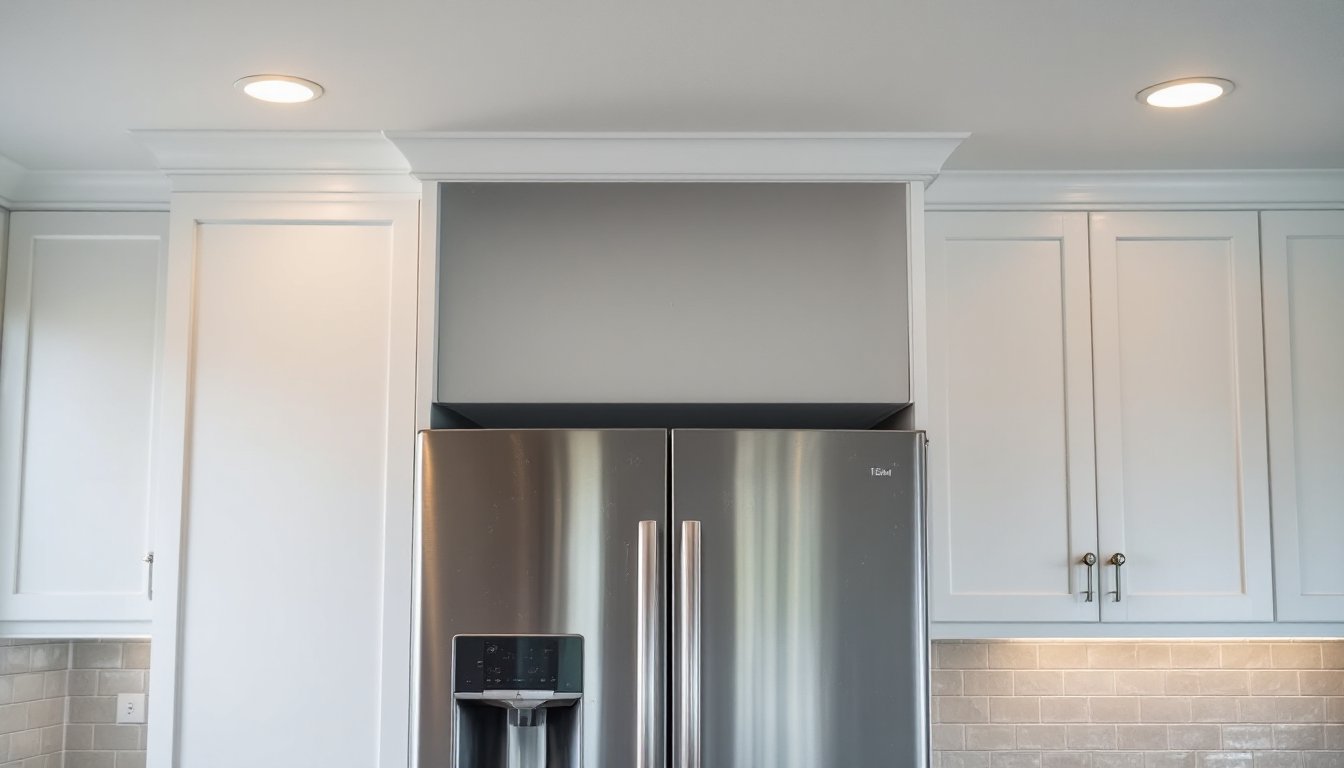
ToggleThat awkward gap between your upper cabinets and the ceiling isn’t just collecting dust, it’s wasted real estate. Most kitchens have anywhere from 12 to 24 inches of unused vertical space that’s begging for attention. Whether you treat it as display area, hidden storage, or deliberately leave it bare, what you do with that zone affects how finished your kitchen feels. The decision isn’t purely aesthetic, either. It impacts cleaning routines, visual balance, and how much usable square footage you’re actually getting from your kitchen.
Key Takeaways
- The space above kitchen cabinets offers 12–24 inches of unused vertical real estate that impacts both aesthetics and maintenance, so choosing to decorate, leave empty, or apply creative styling directly affects your kitchen’s finished appearance and cleaning requirements.
- Decorating above-cabinet space adds visual warmth and personality through baskets, pottery, and vintage finds, but creates more surfaces to dust and degrease—especially near cooktops where grease and airborne particles accumulate quickly.
- Leaving the space above kitchen cabinets empty with a clean paint finish creates a modern, minimalist look that makes ceilings feel taller and requires minimal maintenance, though it may look unfinished in traditional or farmhouse kitchens.
- A practical middle-ground approach includes painting the area a contrasting color or installing LED strip lighting to frame cabinets visually without adding decorative objects or increasing cleanup demands.
- Use the space for overflow storage with labeled bins and shallow shelving organizers (avoiding heavy items), or style with high-quality faux greenery in varied containers for a low-maintenance fresh aesthetic.
- Prevent dust and grease buildup with parchment paper liners, quarterly deep cleaning with degreasing solutions, and a lightweight cordless vacuum with extension attachments to keep your display or storage area hygienic.
Why the Space Above Kitchen Cabinets Matters More Than You Think
The space above cabinets, often called the “cabinet soffit” area when enclosed, or simply the “cabinet top” when open, serves as a visual transition between cabinetry and ceiling. In homes built before the 1990s, this gap was typically filled with a soffit (a boxy structure that drops the ceiling down to meet the cabinet tops). Modern construction trends favor taller cabinets that reach closer to the ceiling, or eliminate the gap entirely with custom cabinetry.
From a design standpoint, how you handle this area influences the room’s perceived height. Leaving it empty with a clean paint finish draws the eye upward and makes ceilings feel taller. Filling it with decor can add warmth and personality but risks making the space feel cluttered if not done thoughtfully. In kitchens with 8-foot ceilings, every visual trick counts.
There’s a practical angle, too. Open space above cabinets becomes a dust and grease magnet, especially near cooktops where airborne particles settle. If you’re not prepared to clean it regularly (think quarterly deep-cleans), leaving it decorated or open may create more maintenance than it’s worth. Conversely, if you’re dealing with a rental or a kitchen you plan to remodel soon, styling this area is a low-commitment way to add character without permanent changes.
Should You Decorate or Leave It Empty? Pros and Cons
Decorating the space:
- Pros: Adds visual interest, showcases collections, softens the hard lines of cabinetry, and can introduce color or texture. It’s an opportunity to display items you love but don’t have room for elsewhere, pottery, vintage signs, cookbooks, or architectural salvage.
- Cons: Creates more surfaces to dust and degrease. Items can look cluttered or dated if not curated carefully. Retrieval requires a step stool. In homes with smokers, pets, or high cooking volume, buildup happens fast.
Leaving it empty:
- Pros: Clean, modern aesthetic. Easier to maintain. Makes ceilings feel higher. Works well in minimalist or Scandinavian-inspired kitchens.
- Cons: Can feel unfinished in traditional or farmhouse-style kitchens where that gap looks like an afterthought. May highlight an awkward cabinet-to-ceiling proportion if the gap is unusually large (18+ inches).
Middle ground: Paint the area a contrasting color (dark charcoal, deep green, or even black) to visually “frame” the cabinets without adding objects. This technique works especially well in kitchens with white or light-colored cabinetry. Another option: install LED strip lighting along the top edge of cabinets for ambient uplighting, which highlights the ceiling and adds drama without physical items.
Creative Decorating Ideas for the Space Above Kitchen Cabinets
Displaying Baskets, Pottery, and Vintage Finds
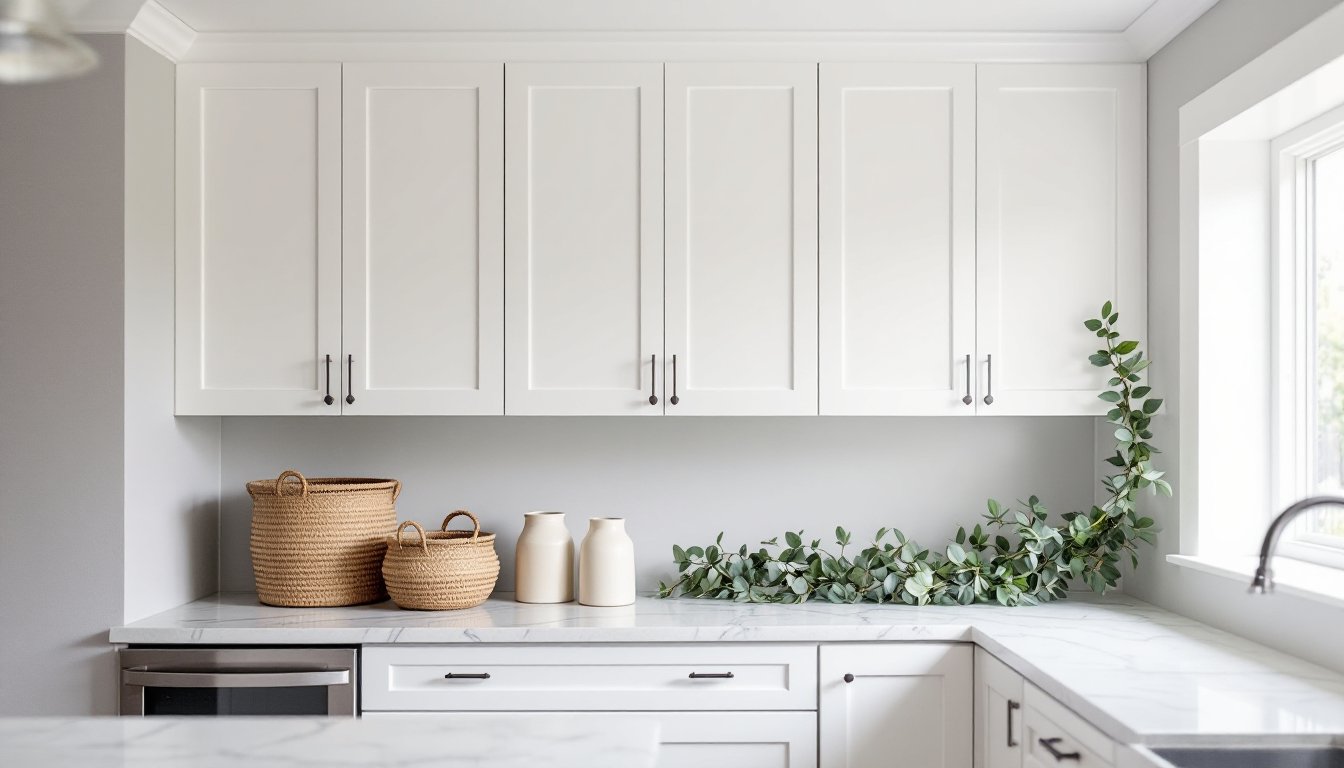
Baskets are a go-to for above-cabinet styling because they add texture, height variation, and a handmade quality that balances the hard surfaces below. Look for woven seagrass, rattan, or wire baskets in varying sizes. Cluster three to five baskets in odd-numbered groupings, staggering heights to avoid a flat lineup.
Pottery and stoneware bring warmth. Vintage crocks, earthenware jugs, or glazed pitchers in neutral tones (cream, ochre, slate blue) work in most kitchens. Avoid anything too precious, these items will collect grime and need periodic washing. If you’re sourcing from flea markets or estate sales, prioritize pieces with some heft: lightweight items can shift or topple from vibrations (slamming cabinet doors, foot traffic).
Vintage finds, enamelware, old wooden bread boards, antique scales, tin advertising signs, add character in farmhouse or eclectic kitchens. Lean oversized items (like a 24×36-inch vintage fruit crate label) against the wall for a casual, layered look. Designers often use a mix of horizontal (baskets, boxes) and vertical (tall vases, candlesticks) elements to create visual rhythm. Resources like 10 Easy Pieces: Kitchen Cabinet Toppers offer inspiration for curated decor that doesn’t look like a thrift store exploded.
Using Greenery and Plants for a Fresh Look
Greenery softens the upper cabinet zone and introduces life into a room dominated by hard materials. Faux greenery is the practical choice here, real plants struggle with inconsistent light and are a pain to water at ceiling height. Look for high-quality artificial eucalyptus, olive branches, or trailing pothos in realistic textures. Avoid anything too shiny or unnaturally uniform.
Style greenery in galvanized buckets, ceramic planters, or wooden boxes to add container variety. Drape faux garland (eucalyptus or ivy) along the cabinet edge for a casual, organic look, secure it with museum putty or small Command hooks to prevent sagging.
If you’re committed to real plants, choose low-light tolerant varieties like pothos, snake plants, or ZZ plants, and use grow lights if natural light is limited. Be aware: you’ll need a sturdy step stool and a watering schedule. Overwatering leads to drips on cabinetry and potential water damage. In high-traffic or luxury home kitchens where a polished look is non-negotiable, stick with faux.
Practical Storage Solutions for Above-Cabinet Space
If display isn’t your priority, use the space for overflow storage. This works best for items you access infrequently: holiday serveware, extra small appliances, bulky serving platters, or specialty bakeware.
Storage bins and baskets: Use labeled plastic bins with lids (12–18 quart capacity) or lidded wicker baskets to corral items and keep dust out. Measure your cabinet depth before buying, most upper cabinets are 12 inches deep, so bins wider than 10 inches may overhang. Stack bins no more than two high to avoid a precarious tower.
Risers and shelving: If your cabinet tops are deep and you want to maximize vertical space, add a wire shelf riser or small bookshelf-style organizer. This creates two tiers of storage without items toppling. Avoid anything too heavy: cabinet tops aren’t load-bearing structures and aren’t rated for significant weight.
Large, rarely-used items: Store things like punch bowls, cake stands, roasting pans, or coolers up top. Wrap delicate items in dish towels or bubble wrap to protect from dust and accidental bumps.
Safety note: Don’t store anything you’d need in an emergency or heavy items that could fall during seismic activity. In earthquake-prone regions, secure larger items with museum wax or skip above-cabinet storage altogether. Many kitchen design resources recommend keeping everyday items at waist-to-shoulder height for accessibility and safety.
How to Keep the Space Above Cabinets Clean and Dust-Free
Dust and grease settle on cabinet tops faster than most homeowners expect. Near the range, airborne cooking oils create a sticky film that traps dust. Here’s how to manage it.
Preventive measures:
- Line the surface: Before decorating, lay down parchment paper, shelf liner, or wax paper on cabinet tops. When it gets grimy, peel it off and replace it, no scrubbing required. Cut liner to fit flush with cabinet edges so it’s invisible from below.
- Use fewer items: The more objects you display, the more surfaces you’ll clean around. Keep groupings tight and leave some open space.
Cleaning routine:
- Quarterly deep clean: Remove all items. Vacuum loose dust with a brush attachment or wipe with a microfiber cloth.
- Degrease as needed: Mix 1 part dish soap to 4 parts warm water or use a degreasing cleaner (Simple Green, Krud Kutter). Spray or wipe down the surface, then rinse with a damp cloth. Dry thoroughly to prevent water spots.
- Wipe down decor: Baskets, pottery, and faux plants need attention, too. Dust baskets with a dry cloth or vacuum with a brush attachment. Wash pottery in warm soapy water: rinse and dry before replacing. For faux greenery, take it outside and shake it out, or use a microfiber duster.
Tool recommendations: A lightweight cordless stick vacuum (like a Dyson or Shark model with a long wand) makes quick work of above-cabinet dust. Pair it with a microfiber extension duster for spot cleaning between deep cleans.
If cleaning this zone feels like too much upkeep, revisit the decision to decorate. Photo galleries of styled cabinet tops look beautiful, but they don’t show the maintenance reality. There’s no shame in keeping it simple, a fresh coat of paint and clean lines beat dusty clutter every time.