Table of Contents
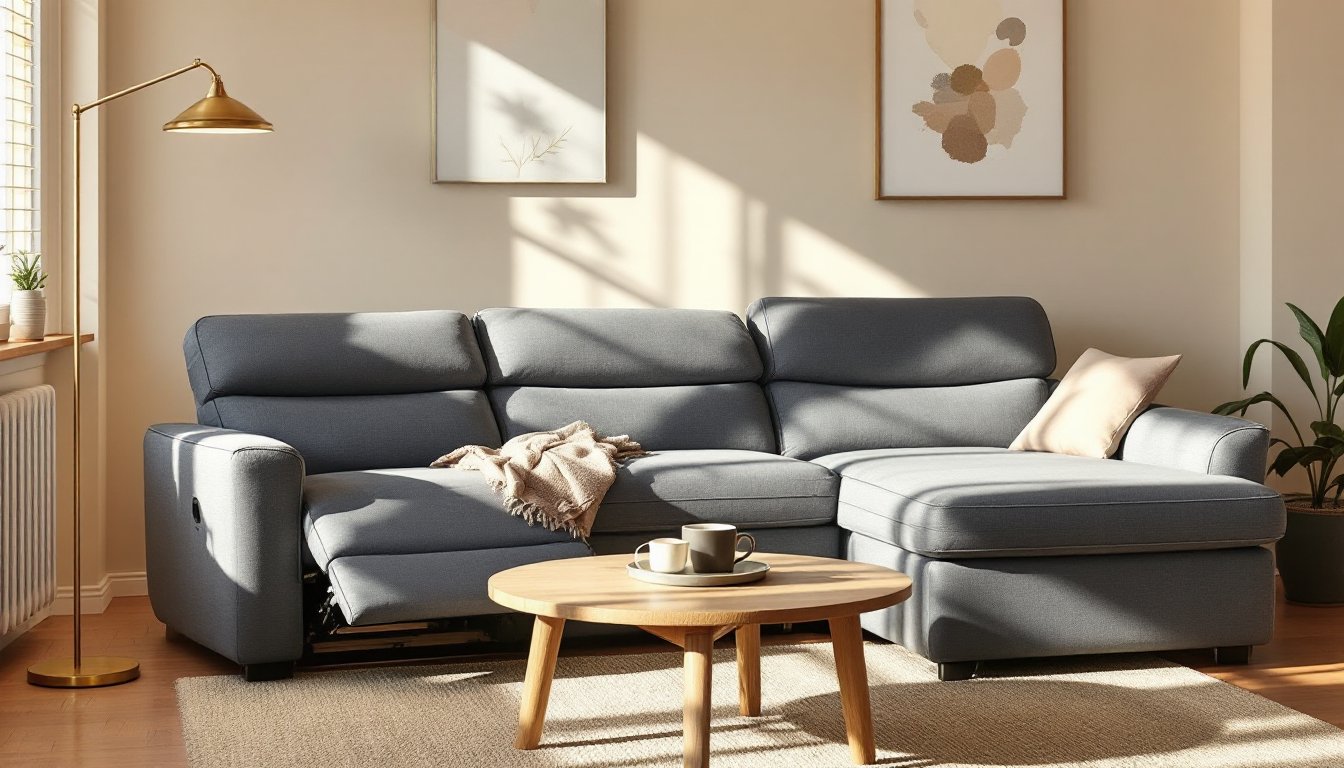
ToggleFinding furniture that delivers comfort without monopolizing your floor plan is one of the toughest puzzles in small-space living. A small sectional sofa with recliner solves that problem by packing corner seating, relaxation features, and smart design into a footprint that actually fits. Whether you’re furnishing a compact living room, a basement den, or an apartment where every square foot earns its keep, a well-chosen reclining sectional delivers movie-night comfort without the spatial bloat of traditional recliners and oversized sofas. This guide walks through what to look for, how to measure correctly, and how to keep your investment looking sharp for years.
Key Takeaways
- A small sectional sofa with recliner combines corner seating, multi-person capacity, and relaxation features in a compact 75–90 inch footprint that fits tight spaces without sacrificing comfort.
- Wall-hugger recliner mechanisms require only 4–6 inches of clearance from walls, unlike traditional recliners that need 18–24 inches, making them ideal for small-space living.
- Prioritize kiln-dried hardwood frames with high-density foam cushions (1.8 lb/ft³ or higher) and mechanisms rated for 250–300+ pounds per seat to ensure durability and prevent sagging.
- Performance fabrics and top-grain leather outperform microfiber on reclining sectionals due to stain resistance and durability in high-friction areas where the mechanism operates daily.
- Measure your room’s usable space, doorway widths, and the recliner’s deployed depth (60–65 inches) before purchasing to avoid placement mistakes and delivery issues.
- Weekly vacuuming of crevices, annual lubricant application to mechanisms, and immediate spot-cleaning of spills are essential maintenance steps that extend a reclining sectional’s lifespan to a decade or more.
Why Choose a Small Sectional Sofa with Recliner?
Small sectional sofas with recliners combine three functions most homeowners want: efficient use of corner space, multi-person seating, and built-in reclining comfort. Unlike standalone recliners that require 18–24 inches of clearance behind them to tilt back, many compact reclining sectionals use wall-hugger mechanisms that need just 4–6 inches from the wall. That difference matters when you’re working with 10×12-foot rooms or open-concept layouts where furniture placement affects traffic flow.
These sectionals anchor a room without dominating it. A typical small reclining sectional measures 75–90 inches along the longest side, substantially smaller than traditional L-shaped sectionals that can stretch past 110 inches. They seat three to four adults comfortably, and the corner configuration creates natural conversation areas without blocking sightlines to windows or doorways.
Another practical advantage: recliners built into sectionals share frames and upholstery with the rest of the piece, so they don’t look like add-ons. If your style leans toward clean lines and cohesive design, integrating the recliner function into the sectional keeps the aesthetic unified.
Key Features to Look for in Compact Reclining Sectionals
Not all reclining sectionals are built the same. The difference between a piece that serves you well for a decade and one that sags in two years comes down to frame construction, mechanism quality, and thoughtful design.
Frame material should be kiln-dried hardwood or engineered wood rated for furniture use. Avoid sectionals with frames made entirely from particleboard or softwoods like pine, which can warp or crack under the stress of daily reclining. Look for corner blocks that are glued and screwed, this is standard in quality furniture and adds torsional strength where the sectional’s two sides meet.
Seat cushions in compact sectionals typically use high-density polyurethane foam with a density rating of 1.8 lb/ft³ or higher. Lower-density foam compresses faster, leading to permanent divots. Some manufacturers layer memory foam over the core for added comfort, but the base foam density is what determines longevity.
Recliner count and placement vary. Some models have a single recliner on one end: others include recliners in both the chaise and the armchair section. If more than one person in your household wants to kick back simultaneously, a dual-recliner configuration is worth the upcharge. Pay attention to whether the chaise side is fixed or reversible, reversible chaises let you flip the layout if you move or rearrange.
Finally, check weight capacity per seat. Quality reclining sectionals are rated for at least 250–300 pounds per recliner. Mechanisms rated below that threshold tend to wear out faster, especially if the sectional sees daily use.
Recliner Mechanisms and Power Options
Recliner mechanisms fall into two main categories: manual and power. Manual recliners use a lever or push-back action. They’re reliable, require no electrical outlet, and have fewer parts to fail. Push-back (also called push-arm) mechanisms are the simplest, you lean back and the footrest deploys. Lever-operated recliners give you more control over recline angle.
Power recliners run on electric motors, usually one per seat. They offer infinite positioning between upright and fully reclined, and many include separate controls for the backrest and footrest. The trade-off is you’ll need an outlet within six feet of the sectional (extension cords are a tripping hazard and violate most manufacturers’ warranties). Higher-end power recliners add USB charging ports and memory presets.
Wall-hugger (or wall-saver) mechanisms, available in both manual and power versions, slide the seat forward as the backrest tilts. This keeps the overall footprint tight. If your sectional backs up to a wall or a console table, a wall-hugger is non-negotiable.
One underrated feature: battery backup on power recliners. If the power goes out, a battery backup (usually a 9V installed in the mechanism housing) lets you return the recliner to the upright position so you’re not stuck in recline mode until the lights come back on.
Best Room Layouts for Small Sectional Sofas with Recliners
Placement makes or breaks a sectional’s functionality. In small rooms, the instinct is to shove furniture against walls, but sectionals often work better floated a few inches out, especially if the recliner is a wall-hugger.
Corner anchoring is the classic move: position the sectional’s inside corner toward the center of the room, with the chaise extending along one wall and the shorter arm along another. This opens up the middle of the room for a coffee table and creates clear pathways. Leave at least 30 inches between the sectional’s edge and any other furniture, that’s the minimum clearance for comfortable passage, per standard interior layout guidelines.
In narrow rooms (10 feet wide or less), run the sectional’s long side parallel to the longest wall, with the chaise jutting into the room. This keeps one side of the room open and prevents the space from feeling like a hallway. Avoid placing the sectional so the chaise blocks a doorway or window, it disrupts flow and light.
For open-concept spaces, use the sectional as a room divider. Float it between the living area and dining area with the back facing the dining zone. This creates visual separation without walls. Just make sure the recliner side faces the TV or focal point: nobody wants to crane their neck while relaxing.
If your room has a fireplace or media console, orient the sectional so recliners face the feature. Measure the viewing distance to your TV, for a 55-inch screen, optimal distance is 7–9 feet: for 65 inches, it’s 8–10 feet. Place the sectional accordingly and confirm the recline path doesn’t block other seating.
Materials and Upholstery: Choosing What Lasts
Upholstery on a reclining sectional takes more abuse than static furniture. The constant friction from reclining, plus body oils and everyday spills, means material choice directly impacts how long the piece stays presentable.
Performance fabrics (often branded as Crypton, Sunbrella, or similar) are woven or treated to resist stains, moisture, and fading. They’re a smart pick if you have kids, pets, or a habit of eating dinner on the couch. Most performance fabrics can be cleaned with water and mild detergent without leaving watermarks. That’s a significant advantage over standard polyester blends, which can show every spill.
Leather and faux leather are popular for reclining sectionals because they wipe clean and develop a lived-in patina (real leather) or stay uniform (faux). Top-grain leather is the gold standard, durable, breathable, and repairable if scratched. Bonded leather (leather scraps glued to a fabric backing) is cheaper but peels within a few years: avoid it. Faux leather (polyurethane or PVC) has improved significantly and high-quality versions can last 5–7 years with care, though they don’t breathe as well and can feel sticky in warm weather.
Microfiber is budget-friendly and soft but shows wear patterns faster than performance fabrics. It’s fine for low-traffic guest rooms but struggles in daily-use living rooms. Look for microfiber labeled as “distressed” or “brushed”, these finishes hide wear better than smooth microfiber.
Many furniture building tutorials emphasize the importance of matching material to use case. If your sectional will see heavy daily use, prioritize durability over initial softness. And remember: any upholstery will last longer if you rotate cushions every few months to even out compression and fading.
Measuring Your Space and Selecting the Right Configuration
Measure twice, order once. A sectional that looked perfect online can become a spatial nightmare if you skip the tape measure.
Start with your room’s usable floor space, not wall-to-wall dimensions. Subtract space for baseboards (typically 3–4 inches), radiators, floor vents, and any architectural quirks like bay windows or support columns. Then map out doorways and traffic paths. The sectional has to fit through your front door, hallways, and any turns. Most sectionals ship in two or three pieces that connect via brackets, but measure door widths anyway. A standard interior door is 30–32 inches wide: exterior doors are often 36 inches. If a sectional piece is wider than your narrowest passageway, it’s not getting in without a furniture hoist and a second-story window.
Measure the recliner’s footprint when deployed. Manufacturers list this as “reclined depth.” A typical small sectional recliner extends 60–65 inches from the wall when fully reclined. Add the sectional’s stationary depth (usually 35–40 inches) and you’ll know the total space claim. If that number eats into walkways or blocks access to sliding doors, either choose a wall-hugger mechanism or place the recliner elsewhere in the configuration.
Chaise orientation matters. Decide whether you want the chaise on the left or right when facing the sectional. Some models are fixed: others let you swap. If you ever plan to rearrange or move, reversible chaises offer flexibility, though they cost slightly more.
Draw your room to scale on graph paper (¼ inch = 1 foot is a common scale) and cut out a scaled template of the sectional. Move it around on paper before committing. This old-school method catches mistakes digital room planners often miss, like forgetting about a floor lamp or underestimating how far a coffee table extends.
Maintenance Tips to Keep Your Reclining Sectional Looking New
Regular upkeep extends the life of any reclining sectional. Most failures aren’t from defects, they’re from neglect.
Vacuum weekly, especially in crevices where the seat meets the back and around recliner hinges. Crumbs and dust work their way into mechanisms and can jam moving parts. Use the upholstery attachment and get under cushions if they’re removable. For non-removable cushions, lift them slightly and vacuum the deck beneath.
Spot-clean spills immediately. Blot, don’t rub, with a clean, damp cloth. Rubbing spreads the stain and can damage fabric fibers. For performance fabrics, a 50/50 mix of water and white vinegar handles most food and drink stains. Test any cleaner on a hidden spot first. Leather and faux leather wipe clean with a damp microfiber cloth: avoid harsh detergents that strip protective coatings.
Condition leather twice a year with a pH-balanced leather conditioner. This prevents cracking and keeps the surface supple. Faux leather doesn’t need conditioning, but a light wipe with a damp cloth every month prevents buildup of body oils that can cause peeling.
Lubricate recliner mechanisms annually. Most manuals recommend a silicone-based lubricant spray on pivot points and springs. This keeps the action smooth and quiet. Avoid WD-40 or petroleum-based products, which attract dust and can degrade plastic components in power recliners.
For power recliners, check wiring connections every six months. Unplug the unit, inspect cords for fraying, and ensure connectors are snug. Loose connections cause intermittent failures that are annoying to diagnose.
Rotate and flip cushions if the design allows. Even high-density foam compresses unevenly if the same spot gets used every day. Swapping cushion positions every three months evens out wear. Some cushions are reversible: flipping them doubles their useful life.
If you’re working with a space-saving sofa or similar compact furniture, these same maintenance principles apply. Tight quarters mean furniture works harder, so consistent care pays off. For more room design concepts that complement small-space living, explore layouts that balance function and comfort without clutter.