Table of Contents
ToggleA cramped patio doesn’t mean sacrificing outdoor comfort or style. With the right approach, even a 4×6-foot balcony or narrow side yard can become a functional retreat. The key is working smarter with layout, vertical space, and dual-purpose materials. Most upgrades cost under $200 if tackled as DIY projects. This guide walks through practical, budget-conscious strategies to maximize every square foot without requiring permits, contractors, or a full weekend of labor.
Key Takeaways
- Smart furniture choices like folding bistro sets and bench seating with storage maximize small patio layouts while keeping costs under $200 for most projects.
- Vertical gardens using pallet planters, ladder shelves, and trellises save valuable floor space while adding greenery and privacy to small patios.
- DIY lighting solutions including LED string lights, solar path lights, and battery-powered lanterns extend usable hours without requiring electrical permits or contractor costs.
- Budget-friendly flooring upgrades like interlocking deck tiles ($3–$6 per sq ft), outdoor rugs, and concrete stain transform cramped patios into polished outdoor retreats.
- Privacy screening with outdoor curtains, bamboo fencing, and lattice panels blocks unwanted views while adding vertical design elements to small outdoor spaces.
- Thrifted accessories, DIY planters, and weatherproof mirrors personalize small space patio ideas on a budget without permanent changes or large expenses.
Maximize Your Layout with Smart Furniture Choices
Furniture scale matters more in tight quarters than anywhere else. A standard 60-inch outdoor sofa eats up floor space that could fit a bistro set plus room to walk. Start by measuring the patio perimeter and mapping out a 24-inch clearance zone for foot traffic, this prevents the cramped feeling that kills small-space design.
Folding and stackable pieces are the workhorses of compact patios. Bistro sets with 16- to 20-inch round tops seat two comfortably and fold flat against a wall when not in use. Metal frames outlast resin in UV exposure and handle moisture better than wood without constant sealing. Look for chairs with slatted seats rather than solid surfaces: they dry faster after rain and weigh less for repositioning.
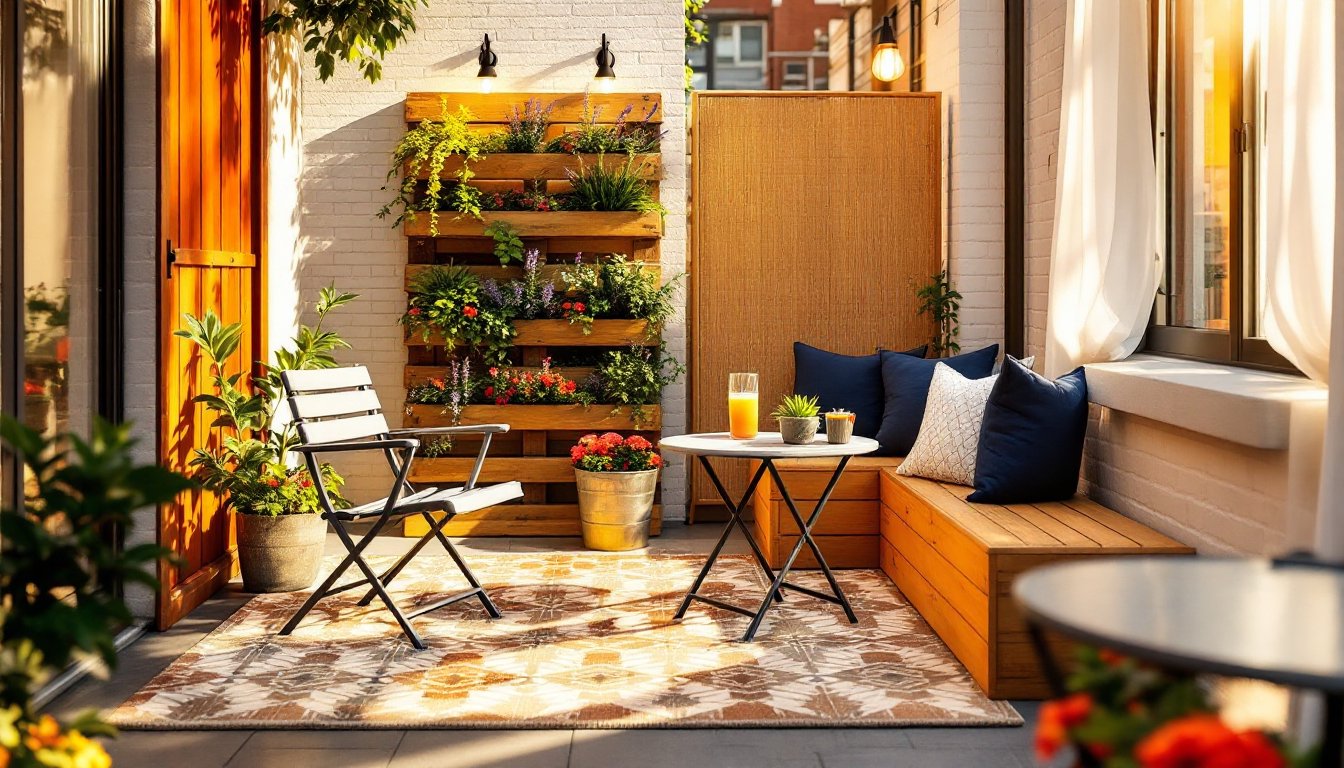
Bench seating with built-in storage beats individual chairs for efficiency. A 48-inch deck box bench provides seating for three adults while hiding cushions, gardening tools, or grill accessories. Cedar and composite lumber versions run $80–$150 as DIY builds using pocket screws and exterior-grade fasteners. If buying pre-made, verify the lid has gas struts or safety hinges, a slamming lid is a finger hazard.
Corner furniture makes use of dead zones. An L-shaped bench or sectional uses two walls as backing, freeing up the center for a small fire pit or planter. Modular units let you reconfigure as needs change. Many space-saving patio furniture designs nest or break down into compact footprints for winter storage.
Create Vertical Gardens to Save Floor Space
When horizontal real estate is limited, grow upward. Vertical planters keep greenery off the ground while adding privacy and visual interest. Wall-mounted systems, trellises, and tiered shelving all work, choose based on sun exposure and load-bearing capacity of your mounting surface.
Pallet planters are the budget king here. A heat-treated (HT-stamped) pallet costs $0–$15 from hardware stores or shipping facilities. Sand rough edges, apply exterior stain or sealer, then staple landscape fabric to the back. Fill gaps with potting soil and insert herbs, succulents, or trailing flowers. Mount to studs or masonry anchors rated for 50 pounds minimum, soil and water add weight fast. Wear safety goggles and a dust mask when cutting or sanding treated wood.
For renters or those avoiding wall penetrations, freestanding ladder shelves lean at 10–15 degrees and hold 4–6 pots on tiered rungs. Bamboo and cedar versions cost $30–$60 and support containers up to 8 inches in diameter. Place heavier pots on lower rungs for stability.
Hanging planters work on pergola beams, fence tops, or shepherd’s hooks. Use marine-grade stainless steel S-hooks or carabiners: standard zinc-coated hardware rusts out in one season. Ensure mounting points can handle dynamic loads, a 10-inch hanging basket swings in wind and weighs 15–20 pounds when watered. According to Gardenista, vertical gardens perform best with drip irrigation or self-watering inserts to reduce maintenance.
Trellis panels transform blank walls into vertical real estate for vining plants like clematis, jasmine, or pole beans. Attach 1×2-inch furring strips behind the trellis to create airflow and prevent moisture rot on siding. Vinyl lattice runs $12–$18 per 4×8 sheet: wood lattice needs annual sealing but looks better.
DIY Lighting Solutions That Add Ambiance Without Breaking the Bank
Good lighting extends usable hours and changes the mood entirely. Skip expensive hardwired fixtures, plug-in and solar options deliver similar results without permits or electrician fees. But, if running new circuits, consult NEC Article 210 for outdoor receptacle requirements and use GFCI-protected outlets.
String lights remain the most versatile choice. LED strands use 80% less energy than incandescent and last 15,000+ hours. Look for 16- or 18-gauge wire on commercial-grade sets: lightweight 20-gauge wire tangles easily and breaks at connection points. Hang using screw-in cup hooks on fascia boards or fence posts, spaced every 24–30 inches to prevent sagging. For masonry, use tapcon screws with a 5/32-inch pilot hole.
Solar path lights cost $3–$8 each and require zero wiring. Place them along step edges or walkways for safety lighting. Most need 6+ hours of direct sun to charge fully, so north-facing patios see limited performance. Upgrade cheap units by replacing the factory NiMH battery with a higher-capacity rechargeable AA after the first season, it doubles runtime.
Battery-powered LED lanterns offer portable ambiance. Models with timers run 4–6 hours per night on three AA batteries for a month. Hang them from shepherd’s hooks or set on side tables. If using candles, only use them in enclosed glass hurricanes to prevent fire hazards from wind gusts.
For a rustic DIY option, make mason jar lanterns with solar lids ($6 for a 4-pack) or battery-operated fairy lights. Drill a 1-inch hole in metal lids for corded lights, then seal edges with silicone caulk. Paint jars with frosted glass spray for diffused light.
Budget-Friendly Flooring and Surface Updates
Cracked concrete or stained wood decking drags down the whole space. Flooring upgrades feel expensive but several DIY methods cost under $2 per square foot in materials.
Interlocking deck tiles snap together over existing surfaces without adhesive. Composite and wood-plastic versions run $3–$6 per square foot and handle freeze-thaw cycles better than solid wood. They’re removable for renters and require only a utility knife for cuts around posts or edges. Ensure the existing surface drains properly, standing water underneath causes mold and warping.
Outdoor rugs add color and define zones instantly. Polypropylene rugs resist mold and fade, cost $30–$80 for a 5×7, and hose clean. Anchor corners with rug tape or furniture weight: wind turns unsecured rugs into sails. Patterns hide dirt better than solids.
For concrete patios, concrete stain transforms dull gray into earth tones or slate blue for $25–$40 per gallon (covers 200–400 sq ft depending on porosity). Acid-based stains penetrate deeper and last longer than water-based, but require respirator masks, rubber gloves, and acid-neutralizing agent during application. Etch the surface with muriatic acid or a concrete degreaser first, stain won’t take on sealed or oily concrete. Some space-saving tables pair well with updated flooring to create cohesive dining zones.
Pallet wood decking works for ground-level patios or over dirt/gravel. Disassemble pallets, denail (wear leather gloves), sand, then arrange boards on a landscape fabric and gravel base. Seal with exterior stain. This isn’t structural, don’t use for elevated decks without proper joist framing and ledger board connections per IRC R507.
Add Privacy and Charm with Affordable Screening Options
Nothing kills relaxation like neighbor sightlines or street traffic. Privacy screening blocks views, reduces wind, and adds vertical design elements. Most solutions install in under two hours.
Outdoor curtains soften hard edges and cost $20–$50 per panel. Use weather-resistant fabrics like Sunbrella or polyester treated for UV and mildew. Hang from galvanized pipe or curtain rods mounted to pergola beams or fence posts with flanged floor mounts. Add curtain tiebacks to control light and breeze. For renters, tension rods work between vertical supports without drilling.
Bamboo or reed fencing rolls out along existing chain-link or wood fences. A 6×15-foot roll costs $25–$60. Secure with zip ties every 12 inches or galvanized wire. Natural materials gray over time, apply a UV protectant sealer annually. According to Southern Living, reed screens provide excellent privacy while maintaining airflow better than solid panels.
Lattice panels offer partial screening and support climbing plants. Attach 4×8 sheets ($12–$18) to pressure-treated 2×4 frames using exterior screws. Space frames 6–8 feet apart and anchor to concrete footings or deck posts. Paint or stain before installation: reaching interior slats afterward is difficult.
For temporary or seasonal solutions, tall planters with ornamental grasses create living screens. Varieties like maiden grass or bamboo reach 6–8 feet in a single season. Use containers at least 16 inches in diameter to prevent toppling. Many tiny apartment ideas translate outdoors when adapted for weather exposure.
Decorating Tips: Rugs, Pillows, and Accessories on a Dime
Accessories inject personality without permanent changes. Small budgets go furthest when focused on high-impact, low-cost items.
Outdoor pillows add comfort and color for $10–$25 each. Look for solution-dyed acrylic covers, they resist fading better than printed polyester. Store pillows indoors during heavy rain or winter: even water-resistant fabrics develop mildew when soaked repeatedly. Pair with space-saving coffee tables to create defined seating zones.
Thrifted finds stretch budgets. Metal plant stands, ceramic garden stools, and wicker baskets show up at yard sales for $5–$15. Spray paint unifies mismatched pieces, use Rust-Oleum Universal or similar all-surface formulas in matte or satin finishes. Work in a well-ventilated area and apply two thin coats rather than one heavy layer to avoid drips.
DIY planters beat store prices. Drill 1/2-inch drainage holes in galvanized buckets, colanders, or wooden crates. Line wood with plastic sheeting to prevent rot. Paint terra-cotta pots with acrylic craft paint sealed with polyurethane for custom colors at $3–$6 per pot.
Mirrors expand visual space. Mount a weatherproof acrylic mirror ($15–$40) on a fence or wall to reflect greenery and light. Use construction adhesive and L-brackets for security, glass mirrors shatter in wind. Apartment Therapy highlights mirrors as one of the top budget tricks for small outdoor spaces.
Repurpose indoor items seasonally. Ceramic side tables, metal lanterns, and woven trays transition outdoors for summer then return inside before frost. This rotation keeps looks fresh without added expense.
Conclusion
Small patios reward intentional choices over large budgets. Prioritize dual-purpose furniture, vertical growing space, and DIY lighting to maximize function and atmosphere. Surface updates and screening establish defined zones, while accessories personalize the space without long-term commitment. Most projects require only basic tools, an afternoon, and materials under $50. Start with one high-impact change, often lighting or a furniture swap, then layer in details as budget allows.