Table of Contents
TogglePlanning a new laundry room or relocating appliances isn’t just about picking a spot and shoving them in. The space needed for washer and dryer installations involves precise measurements, clearance requirements, and ventilation standards that directly affect performance and safety. Too little room means lint buildup, overheating, or doors that won’t open. Too much wasted space could’ve been closet storage. Whether you’re building new, renovating, or simply swapping old machines, understanding these dimensions upfront prevents costly do-overs and ensures your laundry setup actually works for the long haul.
Key Takeaways
- The space needed for washer and dryer placement requires at least 60 inches width and 36 inches depth for side-by-side configurations, with an additional 4–6 inches rear clearance for water and electrical connections.
- Standard full-size washers and dryers measure 27 inches wide and 30–34 inches deep, but actual space requirements often need 4–6 extra inches for rear connections and 1–2 inches for door swing clearance.
- Dryer venting must use rigid metal duct with a maximum 25-foot run from dryer to exterior (minus footage for elbows), as kinked or improper venting traps lint and creates fire hazards.
- Stacked washer-dryer units save footprint to 27–28 inches wide but require 74–80 inches of ceiling height and a stacking kit for safety.
- Ventless dryer options and compact units open laundry installation to interior closets and tight spaces, though they require longer cycles or drain lines for condensation.
- Measure your space at multiple points, verify appliance door swing paths, locate existing hookups, and confirm vent routing before purchasing—a 1-inch miscalculation can prevent proper installation.
Standard Washer and Dryer Dimensions You Need to Know
Most full-size front-load and top-load washers measure 27 inches wide, 38–43 inches tall, and 30–34 inches deep. Dryers typically match at 27 inches wide, 38–43 inches tall, and 30–32 inches deep. These are the machines you’ll find in big-box stores and most homes.
Compact or apartment-size units shrink to about 24 inches wide, 33–36 inches tall, and 24 inches deep. They’re lighter on capacity, typically 2.0–2.5 cubic feet for washers versus 4.5–5.0+ cubic feet for full-size models, but they fit tight spaces like closets or under counters.
Depth matters more than most people think. Manufacturers often list cabinet depth without the door, hoses, or plug. Add 4–6 inches for rear connections and another 1–2 inches if the door swings forward. A “30-inch deep” dryer can easily require 36 inches of actual floor-to-wall space.
Always verify the actual dimensions on the spec sheet before you buy. Model variations exist even within the same brand, and pedestals (drawer platforms that raise the machines 12–16 inches) add height but not floor space.
Minimum Space Requirements for Different Configurations
Side-by-Side Placement
For two full-size machines placed side by side, plan for a minimum alcove or room footprint of 60 inches wide (two 27-inch machines plus 6 inches total for slight breathing room and installation wiggle). Depth should be at least 36 inches to accommodate the machines themselves plus rear connections.
If the space opens to a room rather than sitting in a closet, that 60-inch width works. If you’re boxing them into an alcove with side walls, bump it to 62–64 inches wide so you’re not scraping knuckles during installation or when pulling units out for service.
Top-load washers need extra clearance above. The lid swings up and back, requiring a minimum of 16–20 inches of open space above the machine. Don’t install a shelf or cabinet at 50 inches if your washer is 43 inches tall, you won’t be able to load it.
Stacked Units
Stacking cuts the footprint to roughly 27–28 inches wide and 36 inches deep, but height jumps to 74–80 inches depending on the models and whether you use a stacking kit. Most stacking kits add 1–3 inches and are required for safety, they lock the dryer to the washer and prevent tipping.
Ceiling height becomes the limiting factor. Standard residential ceilings run 8 feet (96 inches), leaving adequate clearance. Basements with dropped soffits, ductwork, or 7-foot ceilings may not accommodate a stacked washer and dryer without modifications.
Stacked setups work well in closets, but the dryer door and lint trap must remain accessible. Plan for at least 3–4 inches in front of the dryer door so it can swing open, and make sure the lint screen isn’t above shoulder height unless you enjoy using a stepstool every load.
Essential Clearance and Ventilation Measurements
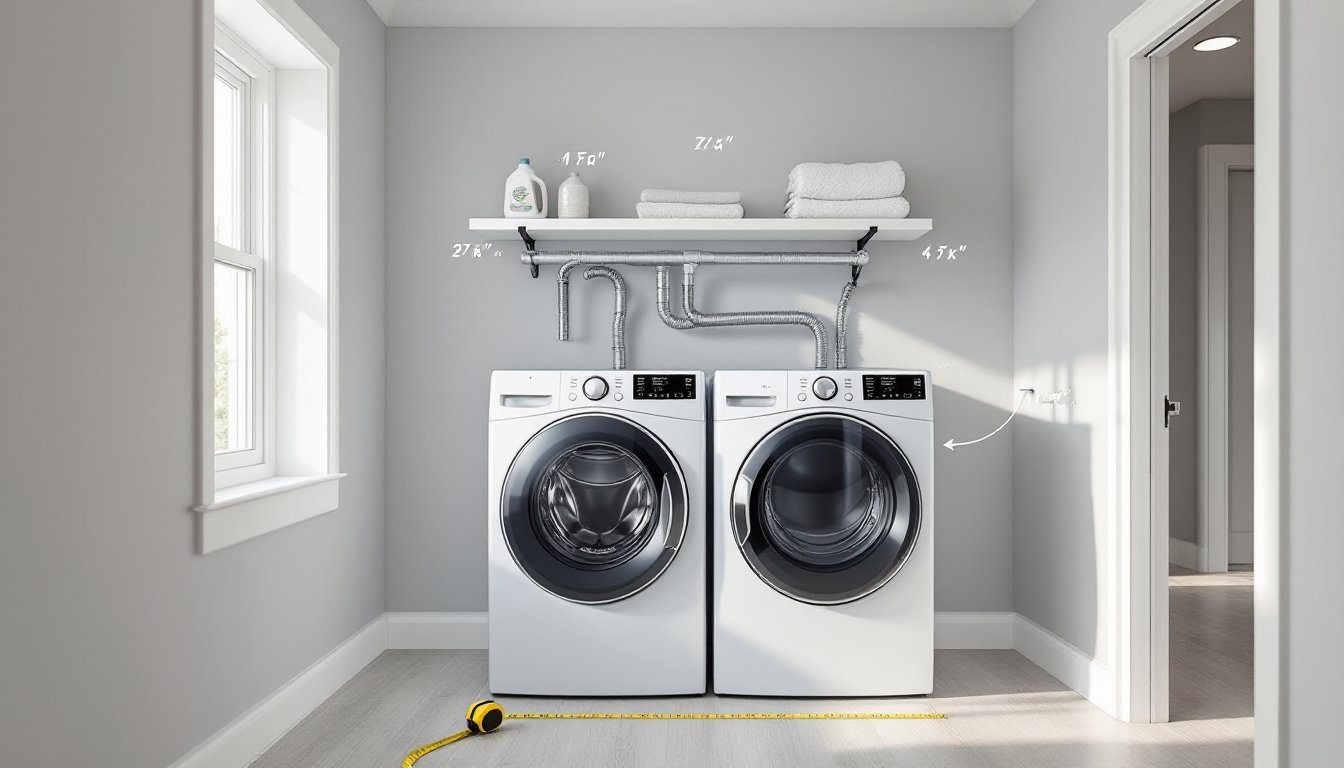
Rear clearance: Leave 4–6 inches between the back of the machines and the wall. This space houses water supply lines (hot and cold), drain hoses, electrical cords, and the dryer vent duct. Kinking a vent hose or crimping a water line causes failures and safety hazards.
Side clearance: Manufacturers typically specify 1 inch minimum on each side for airflow and vibration damping. If you’re installing in an alcove with finished walls on both sides, go with 1–2 inches per side. Front-load machines with side-swing doors need additional clearance, measure the door’s full arc and ensure it doesn’t hit a wall, toilet, or vanity.
Front clearance: Allow at least 48–52 inches in front of the machines so doors can open fully and you can bend down to transfer laundry without contortions. This is especially critical for front-load units where you’re crouching to reach the drum.
Dryer venting is non-negotiable. The International Residential Code (IRC) limits rigid metal duct runs to 25 feet from the dryer to the exterior termination, minus 2.5 feet for every 90-degree elbow and 5 feet for every 45-degree elbow. Longer or kinked runs trap lint, reduce efficiency, and create fire hazards. Always use rigid or semi-rigid metal duct, never flexible plastic or foil, which catch lint and violate most codes.
If you’re venting through an exterior wall, plan the dryer location accordingly. Running vent ducts up through attics or across basements is possible but adds cost and complexity. For projects involving ductwork planning, consult local building codes, some jurisdictions require inspections or specific termination hoods.
Smart Space-Saving Solutions for Tight Laundry Areas
Compact or combo units fit spaces as small as 24 inches wide by 24 inches deep. Washer-dryer combos (one machine that washes and dries in the same drum) eliminate the need for separate appliances but take longer per cycle and have smaller capacities.
Ventless dryers (condenser or heat-pump models) don’t require exterior venting, which opens up installation locations like interior closets, bathrooms, or under-stair nooks. They do need a drain line or reservoir to handle condensed moisture and typically run longer dry cycles than vented models.
Wall-mounted drying cabinets or retractable clotheslines can supplement or replace a dryer in ultra-tight quarters, though they’re not practical for families doing multiple loads weekly.
Sliding barn doors or pocket doors save swing space compared to traditional hinged doors. If your laundry closet door needs 30 inches of clearance, a slider reclaims that zone for foot traffic.
Overhead shelving and between-machine carts use vertical dead space without expanding the footprint. Slim rolling carts (6–8 inches wide) can hold detergent and supplies in the gap between side-by-side machines if you’ve left a few extra inches.
For tight remodels or additions, check cost estimates and layout options early in planning. Relocating plumbing or adding a vent penetration through exterior walls requires permits in most areas and can shift budgets significantly.
Measuring Your Space: A Step-by-Step Checklist
1. Measure the width, depth, and height of the installation area. Use a tape measure and record dimensions at multiple points, walls aren’t always perfectly square. Note any baseboards, trim, or outlet boxes that protrude and reduce usable space.
2. Identify door swing paths. Measure the door opening width and the arc of any hinged doors (appliance doors and room doors). A 30-inch hallway leading to a laundry closet won’t fit a 27-inch-wide machine if the machine has to turn a corner.
3. Locate existing hookups. Mark the positions of hot and cold water valves, the drain standpipe or floor drain, the 240V dryer outlet (typically NEMA 10-30 or 14-30), and the 120V washer outlet. Standard washer hoses are 4–5 feet: dryer cords are 5–6 feet. If hookups are far from where you want the machines, you’ll need extensions or relocation, which may require a plumber or electrician.
4. Check the vent termination route. Measure from the planned dryer location to the nearest exterior wall. Count the number of elbows required and calculate the effective duct length using the IRC formula (start at 25 feet, subtract per elbow). If the run exceeds code limits, plan a different dryer position or consider a ventless model.
5. Confirm ceiling height and overhead obstructions. Measure from the floor to any soffits, ductwork, light fixtures, or structural beams. Stacked units need at least 76–80 inches of clear vertical space.
6. Account for flooring and leveling. Washers and dryers must sit level to prevent vibration and drainage issues. If you’re installing over an uneven basement slab, plan to shim or pour a leveling pad. Some pedestals include adjustable feet, adding flexibility.
7. Double-check appliance specs before purchase. Print or screenshot the exact model dimensions, including depth with the door open, and bring your measurements to the store or keep them handy when ordering online. A 1-inch mistake is the difference between a smooth install and a return trip to the loading dock.
Safety note: Always wear work gloves when moving or positioning heavy appliances, and use an appliance dolly rated for at least 300 pounds. Washers and dryers are top-heavy and can tip during transport. If you’re installing on a second floor or in a finished basement, protect flooring with masonite or cardboard, and get a second pair of hands, these aren’t one-person jobs.