Table of Contents
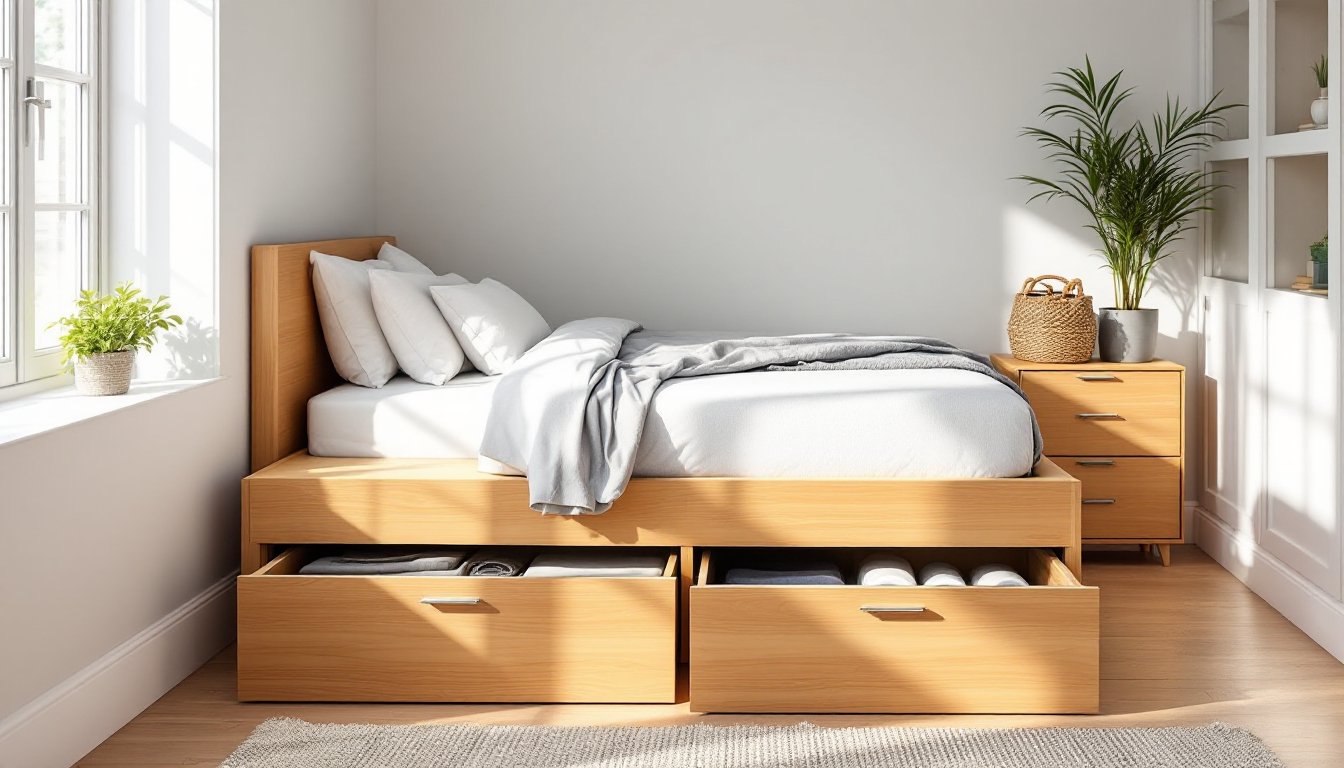
ToggleHigh platform beds with integrated storage offer a practical solution for bedrooms where every square foot matters. Unlike traditional bed frames that waste the space beneath the mattress, these elevated designs transform unused vertical real estate into functional storage zones. They’re particularly effective in apartments, guest rooms, and children’s bedrooms where closet space runs short. The platform design eliminates the need for a box spring, lowering overall costs while creating room for drawers, bins, or hydraulic-lift compartments that can hold seasonal clothing, extra bedding, or gear that would otherwise clutter a closet.
Key Takeaways
- A space saving high platform bed with storage typically stands 12 to 24 inches tall and creates 30 to 50 cubic feet of usable storage volume beneath the mattress without requiring additional floor space.
- Built-in drawers and hydraulic lift systems are the two primary storage configurations, with drawers suiting frequently accessed items and lift mechanisms ideal for bulky seasonal gear or luggage.
- High platform beds improve ergonomics and accessibility, positioning the mattress 24 to 26 inches from the floor to align with natural seated posture, especially beneficial for older adults or those with mobility concerns.
- Material choice significantly impacts durability and cost—solid wood (pine or fir at $3–$5 per board foot) and plywood outperform particleboard for structural integrity and fastener retention in drawer slides and hinges.
- DIY builds cost $200–$350 in materials and offer full customization advantages, while store-bought frames ($400–$1,200+) provide faster assembly but may sacrifice quality if using thin particleboard instead of solid wood or ¾-inch plywood.
- Proper ventilation is essential to prevent mold and extend mattress lifespan—use slat systems spaced 2 to 3 inches apart or drill vent holes every 12 inches in solid plywood decks.
What Is a High Platform Bed with Storage?
A high platform bed sits 12 to 24 inches off the floor, considerably taller than standard frames, which typically measure 7 to 10 inches. The added height creates a cavity underneath or within the frame that accommodates drawers, shelving, or lift-up compartments. The mattress rests directly on a solid plywood deck or slat system spanning the frame’s perimeter, making a box spring unnecessary.
Most designs use nominal 2×6 or 2×8 lumber (actual dimensions 1.5×5.5 or 1.5×7.25 inches) for the main frame rails, joined with lag screws, pocket screws, or bed bolts at the corners. The platform deck is typically ¾-inch plywood or 1×4 slats spaced 2 to 3 inches apart for ventilation. Some commercial models incorporate MDF panels or particleboard, which work fine for the deck but lack the structural strength needed for frame rails.
Storage integration varies widely. Entry-level frames offer open cubbies underneath: mid-range models add slide-out drawers on ball-bearing runners: premium versions include hydraulic or gas-spring lift mechanisms that hoist the entire mattress platform to reveal a cavernous storage bin below. The choice depends on how much gear needs hiding and how often access is required.
Why Choose a High Platform Bed for Small Spaces
Vertical space remains the most underutilized dimension in compact bedrooms. A high platform bed capitalizes on that wasted volume without demanding additional floor area. Instead of cramming a dresser or shelving unit into an already tight room, the bed itself becomes a storage hub.
From a structural standpoint, raising the bed frame creates 30 to 50 cubic feet of usable volume beneath a queen-size bed, depending on platform height. That’s enough to store off-season wardrobes, luggage, or sports equipment that would otherwise monopolize closet real estate. For renters or homeowners in older buildings with minimal built-in storage, this approach beats adding freestanding furniture that eats up walkways and makes rooms feel cramped.
High platforms also improve ergonomics. A mattress surface sitting 24 to 26 inches from the floor (frame height plus mattress thickness) aligns more naturally with most adults’ seated posture, making it easier to get in and out of bed than low-profile frames or futons. This matters especially for older adults or anyone with mobility concerns.
Finally, elevated frames force better organization. When storage is visible and accessible, whether via drawers or lift-tops, users tend to keep it neater than items shoved under a traditional bed. Clear sightlines and dedicated compartments beat the jumbled mess that accumulates under low bed skirts.
Types of Storage Options in High Platform Beds
Storage configuration affects both build complexity and daily usability. The two dominant approaches, built-in drawers and hydraulic lifts, each suit different needs and skill levels.
Built-In Drawers and Pull-Out Compartments
Drawer-style storage divides the under-bed cavity into discrete zones. Most DIY builds incorporate two to six drawers, each mounted on full-extension ball-bearing slides rated for 75 to 100 pounds. Drawer boxes are typically ½-inch plywood or solid pine, with bottoms of ¼-inch plywood set into dados or rabbets for added strength.
Drawer depth ranges from 12 to 18 inches, constrained by the frame’s overall height and the need for clearance above drawer mechanisms. Width depends on bed size: a queen frame can accommodate two 36-inch-wide drawers flanking the center support rail, or four narrower units (around 18 inches each) for better sorting.
Advanced builders sometimes add dividers or compartmentalized trays inside larger drawers for small items like accessories or linens. Soft-close slides add a premium touch but aren’t structurally necessary. For those following detailed building tutorials, drawer construction often represents the most time-intensive phase of the project.
Open cubbies offer a simpler alternative. Instead of drawer boxes and slides, the frame incorporates vertical dividers that create bins accessible from the bed’s foot or sides. Fabric bins or wicker baskets slot into these cubbies, providing flexible storage without the hardware expense. This approach suits beginners or anyone prioritizing speed over polished aesthetics. Effective space optimization often combines both drawer and cubby zones in a single frame.
Hydraulic Lift Storage Systems
Hydraulic or gas-spring lift mechanisms turn the entire mattress platform into a hinged lid. Pressing a release lever or pulling a strap allows the platform to rise smoothly, revealing a full-bed-width storage cavity underneath. This design maximizes volume, there are no drawer dividers consuming space, and suits bulky items like comforters, pillows, or luggage.
Most lift kits use twin gas struts rated for 60 to 120 pounds each, mounted at the bed’s head or foot. The struts counterbalance the platform’s weight, so even a mattress-laden deck lifts with minimal effort. Piano hinges or continuous hinges spanning the frame’s width provide the pivot axis: 3-inch butt hinges spaced every 12 inches work but are less robust over time.
Installation requires precise alignment. If struts are mounted too close to the hinge line, they won’t generate enough leverage: too far, and they’ll bind or overextend. Most manufacturers recommend positioning the strut’s lower mount 6 to 8 inches from the hinge centerline. Detailed free lift-top plans walk through strut placement and frame reinforcement.
One trade-off: hydraulic beds don’t allow access from the sides, so users must lift the entire mattress to retrieve anything. For frequently accessed items, drawer systems win. For seasonal gear or rarely used belongings, hydraulic lifts offer unmatched capacity.
How to Select the Right High Platform Bed for Your Room
Choosing a high platform bed starts with measuring the room, not just the bed footprint, but clearance around it. Building codes don’t regulate bedroom furniture spacing, but functional design suggests 24 to 36 inches of clearance on at least two sides for comfortable movement and bedmaking. In a 10×12-foot bedroom, a queen bed (60×80 inches) consumes roughly 33 square feet, leaving tight margins if dressers or nightstands are added.
Ceiling height matters more with high platforms than standard frames. A 16-inch-tall frame plus a 12-inch mattress puts the sleeping surface at 28 inches, fine in rooms with 8-foot ceilings. But add a thick mattress topper or pillow-top, and sitting upright in bed can feel cramped. For rooms with low ceilings or loft conversions, cap platform height at 12 to 14 inches to maintain headroom.
Material choice hinges on budget and skill. Solid pine or Douglas fir costs $3 to $5 per board foot and machines easily with standard tools. Birch plywood runs $45 to $60 per ¾-inch 4×8 sheet and delivers a cleaner edge grain for painted or stained finishes. MDF or particleboard saves money ($25 to $35 per sheet) but lacks the fastener-holding strength needed for drawer slides or hinge mounts: reserve it for non-structural panels only.
Storage type should align with what’s being stored. Clothing, linens, and soft goods suit drawers or cubbies: hard-shell luggage, sports gear, or seasonal decor fits better in hydraulic-lift cavities. If the bedroom lacks a dresser, prioritize drawer count. If closets already handle clothes and the goal is to stash bulky items, a lift system makes sense. Many space saving bed frames blend both approaches, installing shallow drawers at the foot while reserving the main cavity for lift access.
Finally, consider ventilation. Mattresses need airflow to prevent mold and prolong lifespan. If using a solid plywood deck, drill 1-inch vent holes every 12 inches or install plastic vent grilles. Slat systems (1×4s spaced 2 to 3 inches apart) provide natural airflow and are the preferred choice for memory foam or all-foam mattresses. Just ensure slats span no more than 3 inches apart: wider gaps can void some mattress warranties.
DIY vs. Store-Bought High Platform Beds: Which Is Best?
Store-bought high platform beds with storage start around $400 for basic particleboard frames with open cubbies and climb past $1,200 for hardwood or engineered frames with hydraulic lifts and soft-close drawers. Most use cam-lock connectors or bolt-together construction, making assembly straightforward but limiting customization. Quality varies widely: budget models often use 18mm particleboard (about ⅝ inch) where ¾-inch material should be, leading to sag or hardware pull-out within a few years.
DIY builds let you control materials, dimensions, and joinery. A queen-size platform bed with drawer storage costs roughly $200 to $350 in materials (lumber, plywood, hardware, finish), assuming standard home-center pricing. Tool requirements include a circular saw or miter saw, drill/driver, pocket-hole jig (optional but helpful), and basic hand tools. A weekend build timeline is realistic for someone comfortable with measuring, cutting, and assembly: first-timers should budget two weekends plus finishing time.
Joinery strength matters. Store-bought frames rely on cam locks, which loosen over time and don’t tolerate disassembly/reassembly well. DIY builders can use wood glue and pocket screws (creating joints nearly as strong as mortise-and-tenon), lag screws for heavy-duty connections, or traditional bed bolts for frames that must disassemble for moving. Reinforcing corners with metal corner braces or Simpson Strong-Tie brackets adds rigidity for minimal cost.
Customization is the DIY advantage. Adjust height to match an existing dresser, size drawers to fit specific storage bins, or incorporate features like USB charging ports or under-bed LED strips. Sites offering woodworking project plans provide templates that can be modified for non-standard mattress sizes or room layouts.
That said, hydraulic lift mechanisms are tricky to source and install without experience. Pre-engineered kits simplify the process, but integrating them into a custom frame demands precise measurements and reinforced hinge rails. For first-time builders, starting with a drawer-based design keeps complexity manageable. Those prioritizing speed or lacking tools may find a mid-range store-bought frame a better fit, especially if it uses solid wood rails and plywood panels rather than all particleboard.
Safety note: Always wear safety glasses when cutting lumber and a dust mask when sanding. Use a stud finder or screw guide to avoid splitting wood near edges. For drawer slides, verify weight ratings match actual load plus a 20% safety margin: overloading slides leads to binding and premature failure.
Whether building or buying, inspect joints and hardware carefully. Wiggle assembled corners to check for play: quality frames should feel rigid with no detectable racking. For renters or anyone anticipating a move, prioritize disassembly-friendly designs. Integrated space saving solutions like fold-down tables or modular shelving can complement a high platform bed, turning a bedroom into a true multifunctional zone without adding furniture that crowds the floor.