Table of Contents
ToggleLiving in a compact home doesn’t mean sacrificing a proper dining area. Small space kitchen table sets have evolved far beyond the flimsy card tables of yesteryear, today’s designs blend engineering smarts with livable style. Whether you’re furnishing a studio apartment, a city condo, or a cozy breakfast nook, the right table set can transform dead floor space into a functional gathering spot. The trick is understanding which configurations actually work for tight quarters and which ones just look good in showroom photos. This guide walks through the options that earn their footprint.
Key Takeaways
- Small space kitchen table sets must serve multiple functions—dining, workspace, and zone definition—making them essential for apartments under 800 square feet where every piece of furniture needs to justify its footprint.
- Drop-leaf, wall-mounted, and extendable tables each solve different spatial puzzles; choose based on your actual usage patterns, available floor space, and whether you need to reposition furniture frequently.
- Subtract 36 inches from each room dimension to find your table’s maximum size, allowing safe chair pullout and walking clearance per IRC standards.
- Round and oval small space kitchen table sets seat more people per square foot and navigate tight quarters better than rectangles, though rectangles fit more efficiently against walls.
- Light finishes, glass tops, and under-table storage create visual openness and maximize functionality, while clear tabletops, minimal centerpieces, and strategic lighting prevent cramped aesthetics.
- Verify solid construction with metal extension hardware and bolted joints before purchasing, and always check user reviews—wobbly tables waste valuable small-space real estate.
Why Small Space Kitchen Table Sets Are Essential for Modern Living
The average American kitchen has shrunk by roughly 15% since the 1970s, according to housing data, while open-concept floor plans have blurred the line between cooking and living zones. That shift makes dedicated dining furniture more valuable, not less, it defines zones without walls.
A well-chosen small kitchen table set serves multiple roles. It’s a meal spot, a workspace, a assignments station, and often the only flat surface that isn’t a countertop. In apartments under 800 square feet, every piece of furniture needs to justify its real estate. A table that seats two for breakfast but expands to four for dinner earns that space. One that folds flat or tucks into a corner when not in use earns it twice over.
Beyond function, a proper table set adds structure to small layouts. It anchors a room visually, gives guests a clear place to sit, and prevents the “living on the couch” syndrome that plagues studio dwellers. The key is matching the design to your actual usage patterns, not aspirational dinner parties you’ll host once a year.
Types of Small Space Kitchen Table Sets That Maximize Functionality
Not all compact tables are created equal. Some fold, some extend, some mount to the wall, each solves a different spatial puzzle. Here’s how the main categories stack up.
Drop-Leaf and Extendable Tables
Drop-leaf tables feature hinged side panels (leaves) that fold down when not needed, cutting the table’s width by a third or more. Traditional drop-leaf designs use gate-leg or swing-leg supports that pivot out to hold the raised leaves. Modern versions often use butterfly leaf mechanisms or concealed extension rails.
A typical 36-inch round drop-leaf table can shrink to 12 inches wide with both leaves down, narrow enough to function as a console against a wall, then open to seat four comfortably. The main trade-off: you’ll need clearance on both sides to raise the leaves, so they don’t work tucked into corners.
Extendable tables use a split tabletop with a hidden leaf that stores underneath or between the halves. Pull the ends apart, unfold or insert the leaf, and you’ve added 12 to 18 inches of length. These work well in tiny apartment ideas where day-to-day dining is solo or paired, but occasional guests need room. Look for self-storing leaf designs, hunting for a loose leaf panel in a closet defeats the convenience.
Both styles require solid joinery. Check that extension hardware is metal, not plastic, and that legs are attached with bolts and threaded inserts, not just screws into particleboard. A wobbly table in a small kitchen is worse than no table at all.
Wall-Mounted and Folding Options
Wall-mounted tables (also called Murphy tables or fold-down tables) attach to studs with heavy-duty brackets and swing up flat against the wall when not in use. They’re the ultimate space savers, zero floor footprint when stowed.
Installation requires hitting at least two wall studs (typically 16 inches on center) with 3-inch lag screws rated for the table’s weight plus anticipated load. A two-person 30×18-inch wall-mounted table should support at least 150 pounds when deployed. Most designs include a folding leg or cable support that drops down to stabilize the outer edge. Without that support, wall-mounted tables can sag or create dangerous leverage on the mounting hardware.
Folding tables with built-in chairs take the concept further. The chairs either hang from the underside of the tabletop or nest within the table’s frame. When folded, the entire unit resembles a shallow cabinet or shelf. These work especially well in space-saving dining table setups where storage is as tight as floor space.
One caution: wall-mounted tables can’t be repositioned easily. If you’re renting or prone to rearranging, stick with freestanding options. And always verify your wall construction, drywall anchors alone won’t cut it for a dining surface. Plaster, brick, or concrete walls may need masonry anchors and a hammer drill.
Freestanding folding sets (think bistro-style metal or wood frames) offer more flexibility but require storage space for the folded unit. A 24-inch square folding table with two chairs typically needs a closet footprint of about 26×30 inches when stacked flat. Measure your storage zone before buying.
How to Choose the Perfect Small Kitchen Table Set for Your Space
Start by measuring your available floor space, then subtract 36 inches from each dimension to allow for chair pullout and walking clearance. That’s the IRC-recommended minimum for safe passage around furniture. If your kitchen is 8 feet wide, your table shouldn’t exceed 60 inches (5 feet) in length when fully extended.
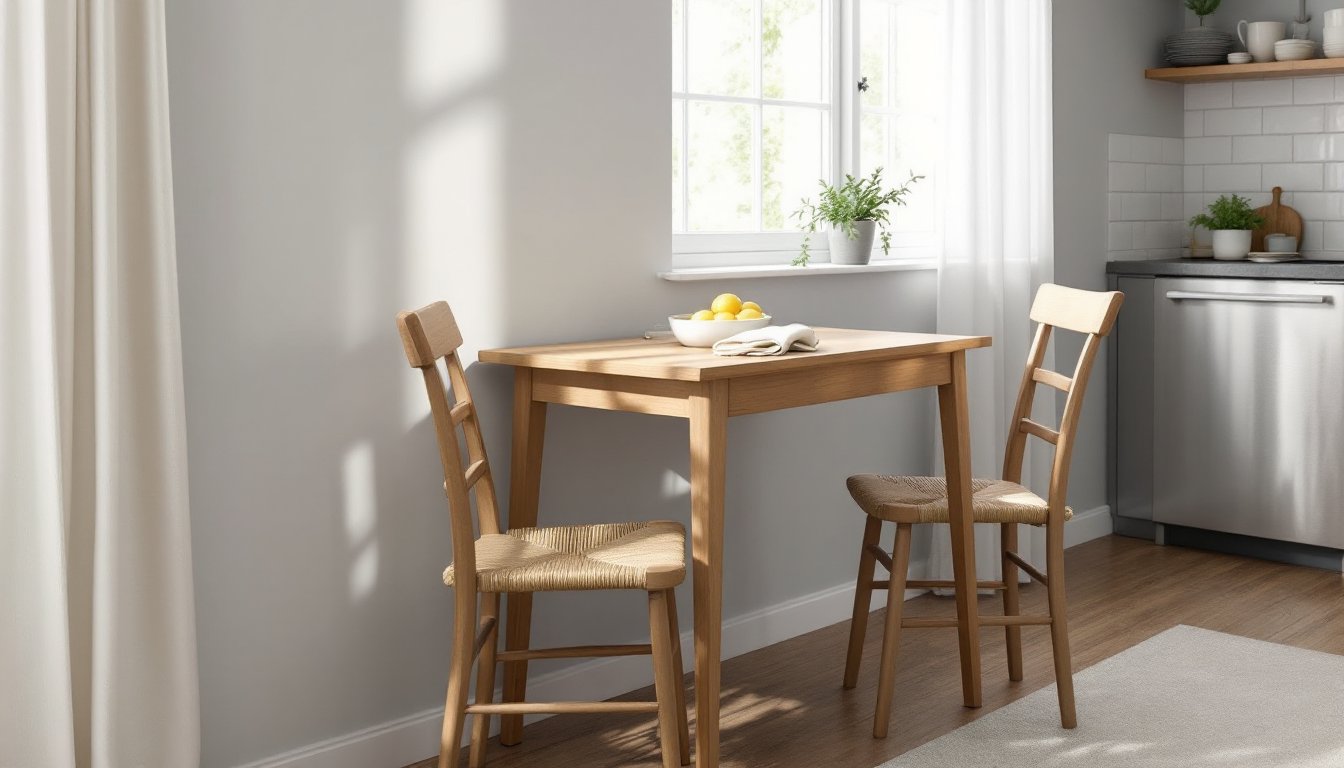
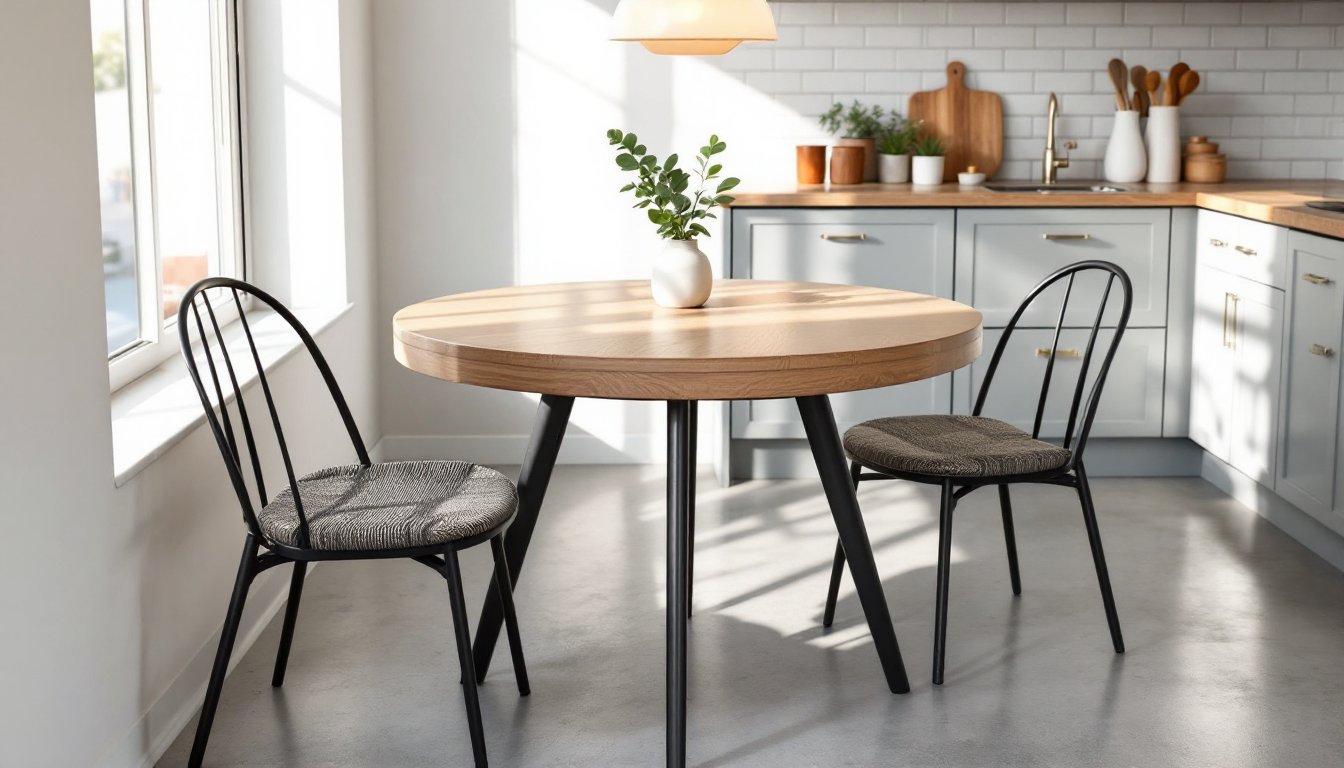
Consider shape carefully. Round and oval tables eliminate sharp corners, making them easier to navigate in tight quarters. They also seat more people per square foot than rectangular tables, a 42-inch round comfortably fits four, while a 42-inch square struggles with three. But rounds don’t push flush against walls, so they waste space if you need the table out of the way when not in use.
Rectangular and square tables fit neatly into corners or against walls. A narrow rectangle (24 to 30 inches wide, 48 inches long) works well in galley kitchens. For studio apartments, designers at Apartment Therapy often recommend tables that double as desks, look for styles without aprons (the horizontal frame beneath the tabletop) so your knees have clearance when sitting.
Material matters for durability and maintenance. Solid wood (oak, maple, walnut) handles daily wear and can be refinished, but it’s heavy, harder to move for cleaning. Engineered wood with veneer keeps costs down but won’t tolerate water rings or scratches as gracefully. Metal and tempered glass tables feel modern and wipe clean easily, though glass shows every fingerprint and crumb.
For chairs, measure seat height and depth. Standard dining chairs are 18 inches tall: your table should be 28 to 30 inches high for a comfortable 10 to 12-inch clearance from seat to tabletop underside. In small spaces, chairs with low backs or transparent materials (acrylic, polycarbonate) reduce visual clutter. Space-saving folding dining sets often include stackable or nesting chairs that store compactly.
Test the table’s stability before buying. Press down on one corner with moderate force, it shouldn’t rock or wobble. Extend any leaves fully and check that locking mechanisms engage firmly. If buying online, verify the return policy and check user reviews for complaints about shaky construction or difficult assembly.
Smart Styling Tips to Make Your Small Kitchen Table Set Shine
In small spaces, your kitchen table is always on display. A few deliberate choices keep it looking intentional instead of cramped.
Choose a light or neutral finish to reflect light and create the illusion of more space. Dark wood can feel heavy in a 10×10 kitchen, though it works if the walls and floors are also light. Glass tops are the gold standard for visual openness, you can see straight through to the floor, which tricks the eye into perceiving more square footage.
Keep the tabletop clear when not in use. A perpetual pile of mail or junk turns your dining area into a horizontal filing cabinet. If you need a centerpiece, go minimal: a small vase or a single candle in a 4-inch holder at most. Bulky centerpieces steal usable surface area and make a small table feel even smaller.
Under-table storage can be a game-changer, though it’s underused. Some designs include built-in drawers or shelves beneath the tabletop, ideal for placemats, napkins, or flatware. If your table lacks this, consider rolling storage carts (12 to 18 inches wide) that tuck underneath. Just ensure the cart’s height is at least 2 inches lower than the table’s apron clearance.
Lighting matters more in compact dining zones because you’re often working with limited natural light. A pendant light centered 30 to 36 inches above the tabletop provides focused illumination without taking up floor space. Dimmer switches let you shift the mood from task lighting (assignments, meal prep) to ambient lighting (dinner). If you can’t hardwire a fixture, plug-in pendants with swag hooks offer a renter-friendly alternative.
Rugs define the dining area but can backfire in small kitchens. If you use one, choose a low-pile material that won’t snag chair legs, and make sure it extends at least 24 inches beyond the table on all sides to accommodate pulled-out chairs. Anything smaller looks like an afterthought. In kitchens under 80 square feet, skip the rug entirely, it chops up the floor visually and makes the room feel smaller.
Color coordination between the table set and surrounding cabinetry or walls creates a cohesive look. Matching wood tones or picking up an accent color from your backsplash ties the space together without adding visual noise. If your kitchen leans industrial or modern, metal chairs with powder-coated finishes in matte black or gray complement stainless appliances and streamline the aesthetic.
Conclusion
Small space kitchen table sets prove that good design isn’t about square footage, it’s about making smart choices that fit how you actually live. Measure twice, think through daily use patterns, and don’t settle for wobbly construction just because it’s compact. The right table earns its footprint every single day.