Table of Contents
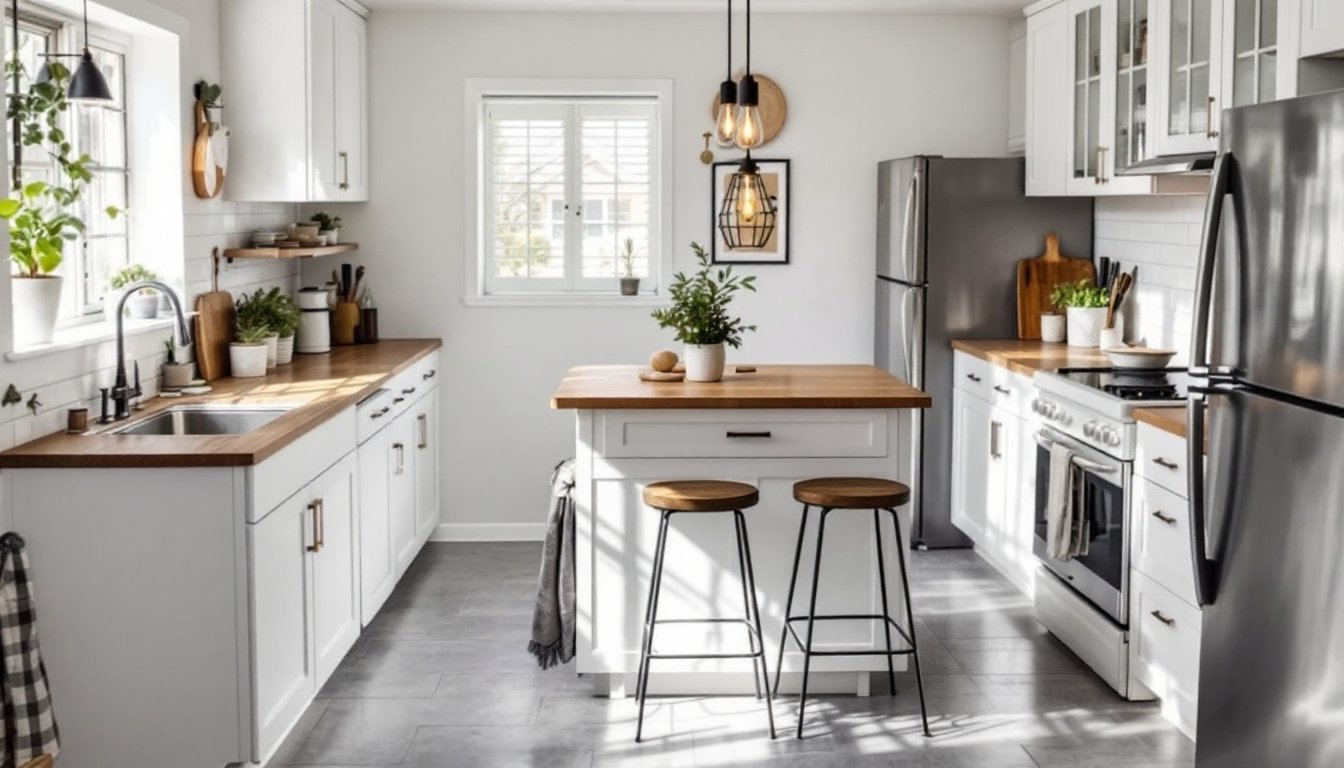
ToggleAdding an island to a small kitchen might seem counterintuitive, but with the right approach, it’s one of the smartest moves a homeowner can make. The key isn’t whether the space can accommodate an island, it’s choosing the right size, shape, and features to match the footprint. In 2026, compact kitchen islands are getting smarter, leaner, and more versatile than ever. This guide walks through proven strategies to incorporate an island into a tight kitchen without sacrificing flow, function, or the ability to open the fridge door all the way.
Key Takeaways
- A small kitchen island sized between 24–36 inches deep and 36–60 inches wide, with at least 36–48 inches of clearance on working sides, can add prep surface, storage, and seating without sacrificing flow.
- Rectangular and narrow rectangular islands work best for compact kitchens, while avoiding ornate shapes, curves, and angles that consume floor space without adding function.
- Multi-functional island features like base cabinets with pull-out trash, under-counter appliances, and 12–15 inch seating overhangs maximize efficiency in tight layouts.
- Strategic placement is critical: float narrow islands down the center of galley kitchens, run them parallel to the long leg of L-shaped kitchens, and test layouts with painter’s tape before purchasing.
- Materials like butcher block ($8–$15 per sq ft), laminate ($20 per sq ft), and stainless steel offer durability and style for small-space island designs without overwhelming the kitchen.
- Mobile islands on locking casters provide flexibility for renters or kitchens with tight layouts, allowing the island to tuck away when additional space is needed.
Why Add an Island to Your Small Kitchen?
An island in a compact kitchen serves multiple roles that fixed cabinetry can’t match. First, it adds prep surface, often the most prized real estate in any kitchen. Even a 24-inch-deep island provides enough room for cutting boards, mixing bowls, and staging ingredients without crowding the perimeter counters.
Second, it creates storage exactly where it’s needed. Base cabinets or open shelving on an island can hold everyday dishes, small appliances, or bulk pantry items. In kitchens under 100 square feet, every drawer and shelf counts.
Third, a well-placed island improves workflow. It can act as a landing zone between the fridge and range, shortening trips and reducing bottlenecks. Many designers follow the kitchen work triangle principle, keeping sink, stove, and refrigerator within 4 to 9 feet of each other, and a compact island often completes that triangle without blocking pathways.
Finally, islands offer seating in kitchens where a full dining table won’t fit. A 12-inch overhang on one side accommodates stools for quick meals or assignments sessions, turning the kitchen into a true multi-use zone. For renters or homeowners who can’t gut walls, a freestanding island is non-invasive and portable.
Choosing the Right Island Size and Shape for Limited Space
The golden rule: maintain at least 36 inches of clearance on all working sides of the island. In tighter kitchens, 42 to 48 inches is ideal, enough space to open cabinet doors, dishwashers, and drawers simultaneously. Measure the room before shopping, not after.
For kitchens between 70 and 120 square feet, islands typically range from 24 to 36 inches deep and 36 to 60 inches wide. A 24 x 48-inch island is a reliable baseline that fits galley or L-shaped layouts without cramping walkways. Go narrower if the kitchen has a single-wall layout or if major appliances dominate one side.
Height matters too. Standard counter height is 36 inches, matching perimeter counters for consistent prep surfaces. Bar-height islands (42 inches) can work if seating is the priority, but they limit utility for tasks like rolling dough or kneading bread.
Compact Island Shapes That Work Best
Rectangular islands are the workhorse for tight spaces. They hug one wall or float parallel to a run of cabinets, keeping traffic lanes clear. Avoid ornate shapes, curves, L-bends, and angles eat up floor space without adding function.
Square islands (30 x 30 or 36 x 36 inches) suit U-shaped kitchens where the island sits dead center. They’re easy to navigate around and can pack surprising storage if outfitted with drawers on multiple sides.
Narrow carts (18 to 20 inches deep) work in galley kitchens under 8 feet wide. These are best used as mobile prep stations that tuck against a wall when not in use. Look for locking casters rated for at least 200 pounds, cheaper wheels wobble under the weight of a stand mixer or cutting board.
Skip kidney-shaped or angled islands unless the kitchen is over 150 square feet. Those designs need room to breathe and typically require custom fabrication, driving up cost without delivering more usable surface.
Multi-Functional Island Features to Maximize Efficiency
The best small-space islands do three or more jobs. Start with built-in storage: base cabinets with adjustable shelves, pull-out trash bins, or deep drawers for pots and baking sheets. Drawers should have full-extension slides (rated for 75 to 100 pounds) so contents are visible and accessible without crouching.
Adding a cooktop or sink to an island requires plumbing or electrical runs, which means opening walls and floors. Budget $800 to $2,500 for a licensed plumber or electrician, depending on how far the island sits from existing supply lines. Check local codes, most jurisdictions require a GFCI outlet within 2 feet of a sink and a dedicated 20-amp circuit for induction or electric cooktops. Gas cooktops need a shutoff valve within 6 feet. If the kitchen is a rental or the work feels too invasive, skip it.
Seating overhangs typically extend 12 to 15 inches from the island base, enough for knees and low-profile stools. A 24-inch-deep island with a 12-inch overhang leaves just 12 inches of depth below for storage, so plan accordingly. Countertop support brackets rated for 200 pounds are a must if the overhang exceeds 10 inches without a knee wall.
Consider space-saving appliances like under-counter fridges or microwave drawers if the island is large enough (30 inches wide minimum). A 24-inch beverage cooler or a single-drawer dishwasher can fit in a compact island and free up perimeter space for full-height appliances. Rolling islands excel when paired with fold-away dining solutions elsewhere in the home.
Open shelving on one or both ends of the island keeps cookbooks, cutting boards, or baskets of produce within reach. It’s cheaper than cabinetry and visually lightens the island, but it also means keeping things tidy, dust and clutter are on full display.
Smart Layout Tips for Small Kitchens with Islands
Placement determines whether an island enhances or wrecks a small kitchen. In a galley layout, float a narrow island (18 to 24 inches deep) down the center if the total width is at least 10 feet. Anything tighter forces single-file traffic and makes opening the oven or dishwasher a two-person negotiation.
L-shaped kitchens handle islands well when the island runs parallel to the long leg of the L, leaving the corner open for through-traffic. Aim for a 42-inch aisle between the island and the base cabinets, enough room for two people to pass or for cabinet doors to swing freely.
U-shaped kitchens can fit a small square or rectangular island if the total room dimensions exceed 10 x 10 feet. Center it so aisles on three sides stay at least 36 inches wide. Test the layout with painter’s tape on the floor before buying anything. Live with it for a few days, open all the cabinet doors, and simulate cooking. If it feels cramped, it is.
Avoid blocking the kitchen work triangle. The island shouldn’t sit directly between the sink and range or force long detours from fridge to stove. Resources like Apartment Therapy often feature real-world kitchen tours that illustrate these principles in action.
If the kitchen has only one entry point, don’t position the island so it forces a chicane just to get in. Leave at least one straight, unobstructed path from the doorway to the main work zone. For ideas on maximizing small kitchen layouts, compact design strategies offer additional inspiration.
Consider a mobile island if the layout is borderline. A cart on locking casters can slide into place during meal prep and roll out of the way for parties or when kids need space to run through. Look for carts with brakes on at least two wheels and a butcher block or stainless steel top for durability.
Design Styles and Materials for Space-Saving Islands
Materials should match the kitchen’s perimeter finishes or provide intentional contrast. Butcher block (typically 1.5-inch-thick maple or oak) is forgiving on knives, relatively affordable ($8 to $15 per square foot), and repairable. It requires monthly oiling with food-safe mineral oil and isn’t ideal near sinks unless sealed with a waterproof finish.
Laminate countertops start around $20 per square foot installed and come in hundreds of colors and patterns. Modern laminates mimic stone and wood convincingly, but edges chip under heavy impact. For small islands, a simple square edge or slight bevel keeps the profile slim.
Quartz and granite add durability and resale value but run $60 to $100+ per square foot. For a 24 x 48-inch island, that’s $480 to $800 just for the slab, plus fabrication and installation. They’re heavy, plan for a structurally sound base cabinet or reinforced cart frame.
Stainless steel tops suit modern or industrial styles and are the easiest to clean (wipe with soapy water and a microfiber cloth). They scratch and dent over time, but many homeowners embrace the patina. Expect $100 to $200 per square foot for custom-welded tops.
Base cabinet finishes range from painted MDF (affordable, smooth, and available in any color) to solid wood (more expensive, but repairable and long-lasting). White or light gray paint reflects light and makes the island feel less imposing. Open-frame designs with legs instead of a solid base create visual breathing room, helpful in kitchens under 80 square feet.
Incorporate the same hardware (cabinet pulls, hinges) as the perimeter cabinets for continuity, or choose a contrasting finish (brass pulls on an island, brushed nickel elsewhere) to make the island a focal point. Many compact table options use similar design principles: slim profiles, multi-use features, and finishes that don’t overwhelm.
For those drawn to high-end aesthetics, elements from upscale kitchen design can be scaled down, think waterfall edges on a narrow island or integrated LED strip lighting under overhangs.
Curated examples of compact islands appear in guides like Remodelista’s small kitchen island roundup, which highlights pre-built options that balance form and function. Another helpful resource is The Kitchn, where real-life kitchen makeovers demonstrate how islands fit into tight footprints.
Conclusion
A small kitchen doesn’t have to mean giving up an island. With careful measurement, smart material choices, and multi-functional features, even a 70-square-foot galley can accommodate a compact work surface that earns its footprint. Prioritize clearance, keep the design simple, and remember that portability isn’t a compromise, it’s a feature.