Table of Contents
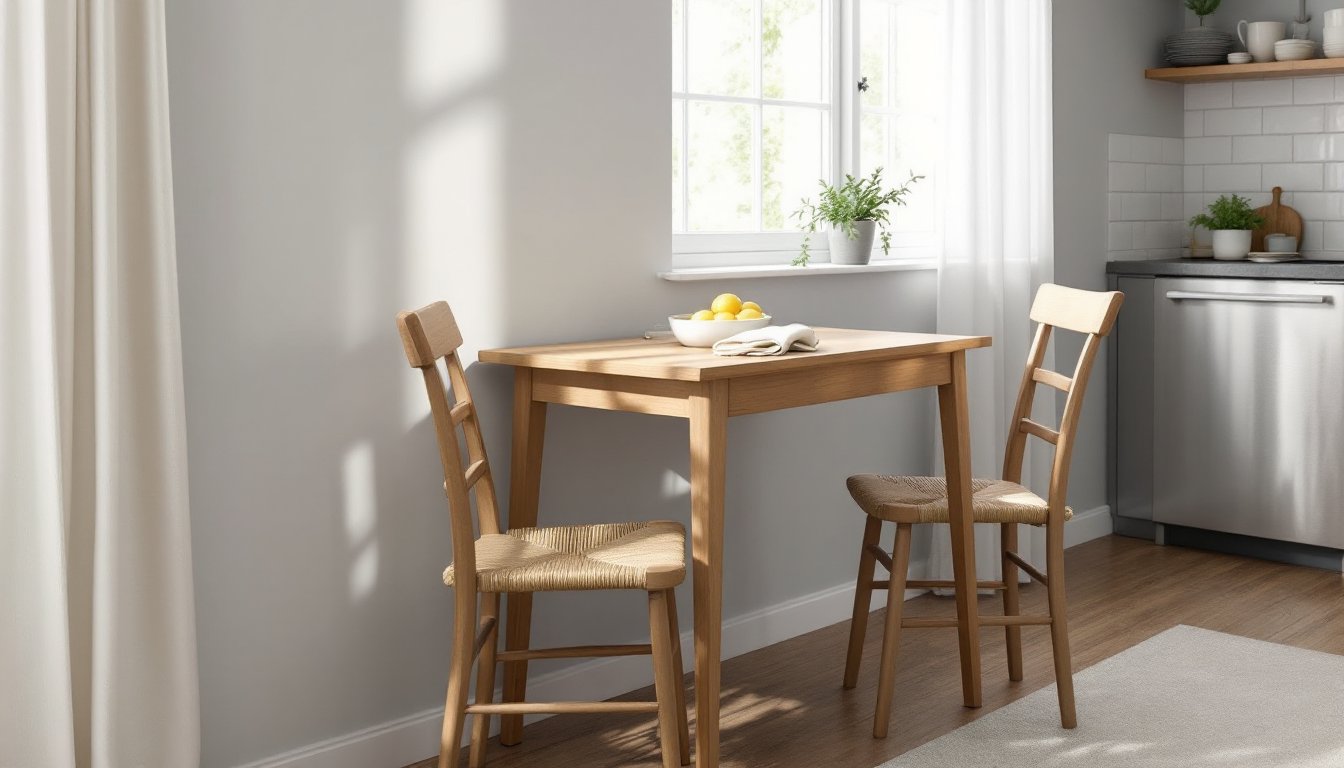
ToggleA compact kitchen doesn’t mean sacrificing a proper dining spot. Whether it’s a galley layout, an efficiency apartment, or a corner nook that barely fits two people shoulder-to-shoulder, the right table can transform awkward square footage into a functional eating area, and sometimes even a workspace or serving station. The challenge isn’t just finding something that fits: it’s choosing a piece that works with the room’s flow, supports daily routines, and doesn’t make the space feel more cramped. This guide walks through table styles, measurement strategies, and material considerations to help anyone pick a small kitchen table that punches above its size.
Key Takeaways
- The right small kitchen table improves traffic flow, defines zones, and makes compact spaces feel larger by choosing pieces with open legs and slim profiles.
- Drop-leaf, folding, and wall-mounted tables are the most space-efficient options, with wall-mounted designs offering zero footprint when not in use if properly anchored into wall studs.
- Measure your space carefully by subtracting 36–42 inches clearance around seating areas and testing the table’s footprint with painter’s tape for at least a day before purchasing.
- Multi-functional features like built-in drawers, extension mechanisms, and nesting chairs transform a small kitchen table into storage, workspace, and dining solution simultaneously.
- Material choices like lightweight laminate, glass with slim bases, and light-toned woods balance durability with visual lightness, while matte finishes hide wear better than high-gloss options in everyday use.
Why the Right Table Matters in a Compact Kitchen
In tight quarters, every piece of furniture either earns its footprint or becomes a liability. A poorly chosen table blocks traffic patterns, bumps into cabinet doors, or forces someone to shimmy sideways just to reach the fridge. The right one, but, opens up circulation and can even make the room feel larger by defining zones without walls.
Beyond clearance, a small kitchen table often serves multiple roles. It’s breakfast counter, laptop desk, mail sorting station, and holiday buffet prep surface, sometimes all in the same day. That versatility demands thoughtful selection. A table that folds, extends, or tucks against a wall when not in use keeps the kitchen from feeling like a permanent obstacle course.
Finally, proportion matters for visual balance. An oversized round table in a narrow galley creates the illusion of a boulder wedged into a hallway. A slim rectangular or square piece with clean lines and open legs lets light and sightlines pass through, preserving the sense of space. Getting this balance right is less about aesthetics and more about livability, because a kitchen that feels good to move through is one that actually gets used.
Best Small Kitchen Table Styles for Tight Spaces
Not all tables are built for cramped footprints. Some styles inherently save space: others just pretend to. Here are the designs that actually deliver.
Drop-Leaf and Folding Tables
Drop-leaf tables feature hinged leaves on one or both sides that fold down when not in use, shrinking the profile by 50% or more. Traditional drop-leaf designs use swing-out gate legs for support: modern versions often use pivoting brackets or pull-out supports. These work exceptionally well in kitchens where the table only needs to seat two on weeknights but four on weekends.
For even tighter spaces, a true folding table with collapsible legs can be stored completely out of the way, leaned against a wall, slid behind a sofa, or hung on wall-mounted brackets. Look for models with a locking mechanism that prevents accidental collapse and a finish that can handle moisture and food spills. Laminate or sealed wood beats unfinished particleboard every time. Many space-saving folding dining setups include chairs that nest or stack, which is a bonus when storage is measured in inches.
One practical note: check the undercarriage before buying. Some folding mechanisms require a surprising amount of clearance to deploy and can catch on chair backs or baseboards. Test the action in the store if possible.
Wall-Mounted and Floating Tables
A wall-mounted table (sometimes called a murphy table or fold-down table) attaches directly to wall studs and swings up when not in use. This is the most space-efficient option available, the footprint drops to zero. Installation requires locating studs with a stud finder and using heavy-duty lag screws or toggle bolts rated for the table’s weight plus load. Most models support 75–150 pounds when properly mounted, which is plenty for dishes and elbows but not for someone leaning their full weight on the edge.
Floating tables pair especially well with wall-mounted benches or backless stools that slide underneath. According to Apartment Therapy, this setup is a go-to in micro-apartments where every square foot counts. Just be realistic about the room’s actual usage, if the table needs to stay down most of the time, a wall-mount loses its advantage.
One caution: drywall anchors alone won’t cut it for anything beyond a very light shelf. Always anchor into studs (typically 16 inches on center in modern construction, sometimes 24 inches in older homes). If studs don’t align with the desired table location, consider a backer board installed between studs during a remodel, or choose a different table style.
How to Measure Your Space for the Perfect Fit
Before browsing catalogs or scrolling through listings, grab a tape measure and a pencil. Guessing dimensions is how tables end up on the curb after a week.
Start by measuring the total floor area available for the table, then subtract 36 inches on all sides where people will sit. That’s the minimum clearance needed to pull out a chair and sit comfortably without ramming into a counter or wall. In practice, 36 inches is tight, 42 inches is better if the space allows. For traffic lanes where people walk but don’t sit, allow at least 30 inches but aim for 36 inches to avoid the sideways shuffle.
Next, map out fixed obstacles: cabinet door swing arcs, refrigerator door radius, dishwasher pull-out, and any floor vents or radiators. Use painter’s tape on the floor to outline the table’s footprint at actual size. Live with that outline for a day or two. Open the fridge. Sweep the floor. Cook a meal. If the tape gets in the way, the table will too.
For table height, standard dining tables sit at 28–30 inches, which pairs with chairs at 17–19 inches seat height. Counter-height tables (34–36 inches) work with stools and can double as extra prep surface, but they eat up visual space and feel less casual. Bar-height tables (40–42 inches) are rarely a good fit in small kitchens unless the ceiling is unusually high.
Finally, measure doorways and hallways between the point of delivery and the kitchen. A table that won’t fit through the door is a problem best caught before the delivery truck leaves. Many compact dining solutions ship with removable legs or fold for transport, confirm before ordering.
Multi-Functional Features That Maximize Every Inch
In a small kitchen, single-purpose furniture is a luxury most people can’t afford. Look for tables with built-in storage, extension capabilities, or adaptable geometry.
Drawers and shelves built into the table apron or base provide landing spots for placemats, flatware, napkins, or keys. Even a single shallow drawer can eliminate counter clutter. Open shelves underneath work for cookbooks or serving bowls but will collect dust, choose based on cleaning tolerance.
Extension mechanisms turn a two-seater into a four- or six-seater. Butterfly leaf extensions store inside the table and pop up with a pull-and-twist: separate leaves need a closet or under-bed storage. Self-storing designs are worth the upcharge if storage is already maxed out. According to The Kitchn, many small-space dwellers prefer drop-leaf designs over removable leaves purely for the convenience factor.
Adjustable height tables (lift-top or gas-spring models) can shift from coffee table to dining height, though these tend to be pricier and mechanically complex. Stick with reputable manufacturers, cheap lift mechanisms bind, wobble, or fail within a year.
Nesting or tucking chairs are technically furniture, not table features, but they’re crucial to the overall footprint. Chairs that slide completely under the table or stack in a corner return usable floor space the moment the meal ends. Backless stools, benches, and molded-ply chairs typically tuck best. Upholstered chairs with arms rarely do.
For truly integrated furniture solutions, some builders install custom banquettes with flip-top bench seating that doubles as storage. This requires basic carpentry skills, building a frame from 2x4s, adding a plywood top, hinging the lid, and upholstering the cushion, but it’s a weekend project for someone comfortable with a miter saw and drill.
Material and Design Choices for Small Kitchens
Material selection affects durability, maintenance, and how much visual weight a table adds to the room. In a small kitchen, lighter tones and slimmer profiles generally work better, but function trumps fashion.
Solid wood tables (oak, maple, walnut) are durable and can be refinished, but they’re heavy and visually dense. Dark woods like walnut can make a small kitchen feel even tighter unless balanced with light walls and floors. Lighter woods like ash or birch keep things airier. Expect to oil or wax wood annually and address spills quickly, standing water causes rings and warping.
Laminate or veneer over MDF or particleboard brings wood looks at a fraction of the weight and cost. Quality varies wildly. Cheap particleboard swells and delaminates if it gets wet: higher-grade MDF with sealed edges holds up reasonably well. Check edge banding, it should be heat-fused, not glued on with visible seams.
Glass tops (tempered, not annealed) create visual transparency and reflect light, which can make a small kitchen feel more open. Fingerprints and smudges are constant, so plan on wiping down the surface daily. Glass also telegraphs clutter, crumbs and water rings are impossible to ignore. Pair with a slim metal or wood base to avoid a heavy look. Space-saving tables in glass often use powder-coated steel frames for a modern, minimalist vibe.
Metal tables (steel, aluminum, stainless) are lightweight, tough, and easy to clean but can feel industrial or cold unless softened with wood accents or warm lighting. Stainless scratches easily and shows every fingerprint: brushed or matte finishes hide wear better than polished.
Butcher block or solid surface (like Corian) doubles as a cutting or prep surface in a pinch, which is handy in kitchens where counter space is scarce. Butcher block requires regular oiling and isn’t stain-proof: solid surface resists most stains but can scorch or scratch.
For table base design, pedestal or trestle bases allow flexible seating arrangements since there are no corner legs to dodge. Four-leg tables are more stable and easier to level on uneven floors but limit seating to the sides. Hairpin or tapered legs look lighter and allow more floor visibility, which helps a room feel less crowded.
Finally, consider finishes carefully. Matte and satin finishes hide fingerprints and minor scratches better than high gloss. If kids or messy eaters are in the picture, skip anything labeled “hand wash only” or “spot clean”, a small kitchen table needs to handle real life, not a showroom.