Table of Contents
ToggleLiving in a smaller home doesn’t mean settling for a cramped loveseat or a single armchair jammed in the corner. A well-chosen sectional can actually work better in tight quarters than traditional furniture arrangements, offering more seating, better flow, and smarter use of dead corners. The trick is knowing what to look for and how to configure it. This guide walks through the features, layout strategies, and styling moves that make a small space sectional both functional and good-looking, without turning your living room into an obstacle course.
Key Takeaways
- A small space sectional maximizes seating capacity and better utilizes awkward corners compared to traditional sofa-and-loveseat arrangements, making it ideal for studios and compact living rooms.
- Prioritize modular or reversible sectionals with shallow depth (32–34 inches), exposed legs, and low-profile arms to maintain visual openness and floor space in tight quarters.
- Storage and multi-functional designs—including lift-top chaises, sleeper mechanisms, and paired ottomans—add practical value without requiring additional furniture pieces in limited rooms.
- Measure your floor plan carefully using painter’s tape, identify your anchor wall, and ensure at least 30–36 inches of clear walking pathways to avoid blocking doorways, windows, or heating vents.
- Style your small space sectional with light or neutral upholstery, a proportional area rug, minimal pillows, and vertical elements like artwork or tall plants to keep the room feeling open and balanced.
- Choose apartment-friendly configurations—like two-piece designs or modular sectionals that fit through standard 32-inch doors—and verify delivery and return policies before purchasing.
Why a Sectional Sofa Works Perfectly in Small Spaces
Most people assume sectionals are only for sprawling family rooms, but the opposite is often true. In tight layouts, a sectional does double duty: it fills awkward corners that wouldn’t fit a standard sofa and loveseat combo, and it creates clear traffic lanes instead of forcing people to weave around scattered furniture.
Corner sectionals, in particular, hug walls and make use of space that would otherwise hold a side table or nothing at all. Instead of a sofa floating in the middle of the room with chairs flanking it, a sectional anchors one zone and leaves the rest open. That’s a win in studios, small living rooms, or any space where every square foot counts.
Another benefit: sectionals offer more seating per footprint. A typical 80-inch sofa seats three people (uncomfortably). An L-shaped sectional with similar overall dimensions can seat four or five, thanks to the corner seat and chaise extension. For anyone who hosts movie nights or game days, that’s a real advantage.
Finally, sectionals can double as room dividers in open-plan layouts. Position the back of the sectional toward your kitchen or entryway to create a visual boundary without blocking light or sightlines. It’s a cleaner solution than bookshelves or curtains, and it keeps your space feeling open.
Key Features to Look for in a Small Space Sectional
Not all sectionals are created equal, especially when floor space is limited. Focus on features that maximize utility without adding bulk.
Size and Configuration Options
Start with actual measurements, not product descriptions. A “compact” sectional can still be 90 inches wide. Measure your room, wall to wall, and map out walking clearances. You need at least 30 inches of pathway around furniture for comfortable movement: 36 inches is better.
Look for modular or reversible designs. Modular sectionals break into individual pieces (armless chairs, corner wedges, chaise ottomans) that you can rearrange as your layout evolves. Reversible chaises let you swap the long end from left to right without buying new furniture. That flexibility is critical in rentals or homes where you might move rooms later.
Depth matters, too. Standard sectionals run 36–40 inches deep: apartment-scale versions sit closer to 32–34 inches. That 4-inch difference won’t hurt comfort, but it frees up valuable floor space. Check if the piece has low-profile arms (track arms, English arms) instead of rolled or pillow arms, those save another 3–4 inches per side.
Many homeowners overlook leg style. Exposed legs (wood, metal, tapered) create visual space underneath, making the room feel less crowded. Skirted or blocky bases look heavier. If the sectional comes with multiple leg heights, choose the taller option, it makes vacuuming easier and adds breathing room.
Finally, consider apartment-friendly integrated furniture approaches that combine seating with built-in side tables or USB ports. These eliminate the need for extra end tables, which can clutter narrow rooms.
Storage and Multi-Functional Designs
Storage sectionals are game-changers in small homes. Look for lift-top chaises with hidden compartments underneath, perfect for stashing throw blankets, board games, or off-season pillows. Some models include pull-out drawers along the base or under-seat storage accessible via removable cushions.
Sleeper sectionals add a guest bed without sacrificing daily seating. Modern mechanisms (pull-out, fold-down, or pop-up styles) have improved dramatically: you’re no longer stuck with a lumpy bar in your back. Check the mattress thickness, anything under 4 inches of memory foam or innerspring is too thin for overnight guests. Also confirm the pull-out clearance: some sleepers need 24–30 inches of space in front to fully extend.
Ottomans are underrated. A storage ottoman pairs well with a smaller two-piece sectional, giving you a footrest, extra seating, and hidden storage in one. Choose one with a removable lid or flip-top, and make sure it’s sturdy enough to hold weight when someone sits on it. Implementing space-saving strategies can further free up precious floor area around your sectional.
How to Choose the Right Sectional for Your Layout
Template furniture plans don’t work in small spaces. You need to measure, mock up, and think about real-world use.
Step 1: Map your floor plan. Use painter’s tape to outline the sectional footprint on your floor. Include the depth (front to back) and width (side to side), plus any reclining or pull-out extension. Walk around it. Does it block doorways, windows, or heating vents? Can you open closet doors fully? Adjust before you buy.
Step 2: Identify your anchor wall. In most small rooms, one wall is longer or more open, that’s where the sectional should go. Corner configurations work best in square rooms: L-shaped or two-piece setups suit narrow, rectangular spaces. Avoid floating a sectional in the middle unless your room is truly open-plan and you’re using it as a divider.
Step 3: Think about sight lines and focal points. Point seating toward your TV, fireplace, or window view. If the sectional’s chaise blocks a window, flip the configuration or choose an armless design. As interior designers note, small rooms benefit from clear visual flow, avoid placing the back of a tall sectional where it interrupts the longest sightline.
Step 4: Account for recline and movement. If you want a reclining sectional, add 12–18 inches of clearance behind it. Manual recliners need more room than power versions. Test the mechanism in-store if possible: some budget recliners are loud or jerky.
Step 5: Consider scale and proportion. A sectional shouldn’t overwhelm the room. If your living room is under 150 square feet, stick with a two-piece (sofa + chaise) instead of a full three-piece L-shape. For truly tight quarters, explore space-saving sofa designs like armless loveseats with modular add-ons.
Don’t forget doorways and stairs. Modular sectionals ship in separate boxes and fit through standard 32-inch doors. One-piece or permanently attached sectionals might require professional delivery and furniture hoisting, ask about return policies if it won’t fit.
Styling Tips to Make Your Small Space Sectional Shine
A sectional is a big piece. Make it work visually with smart styling moves.
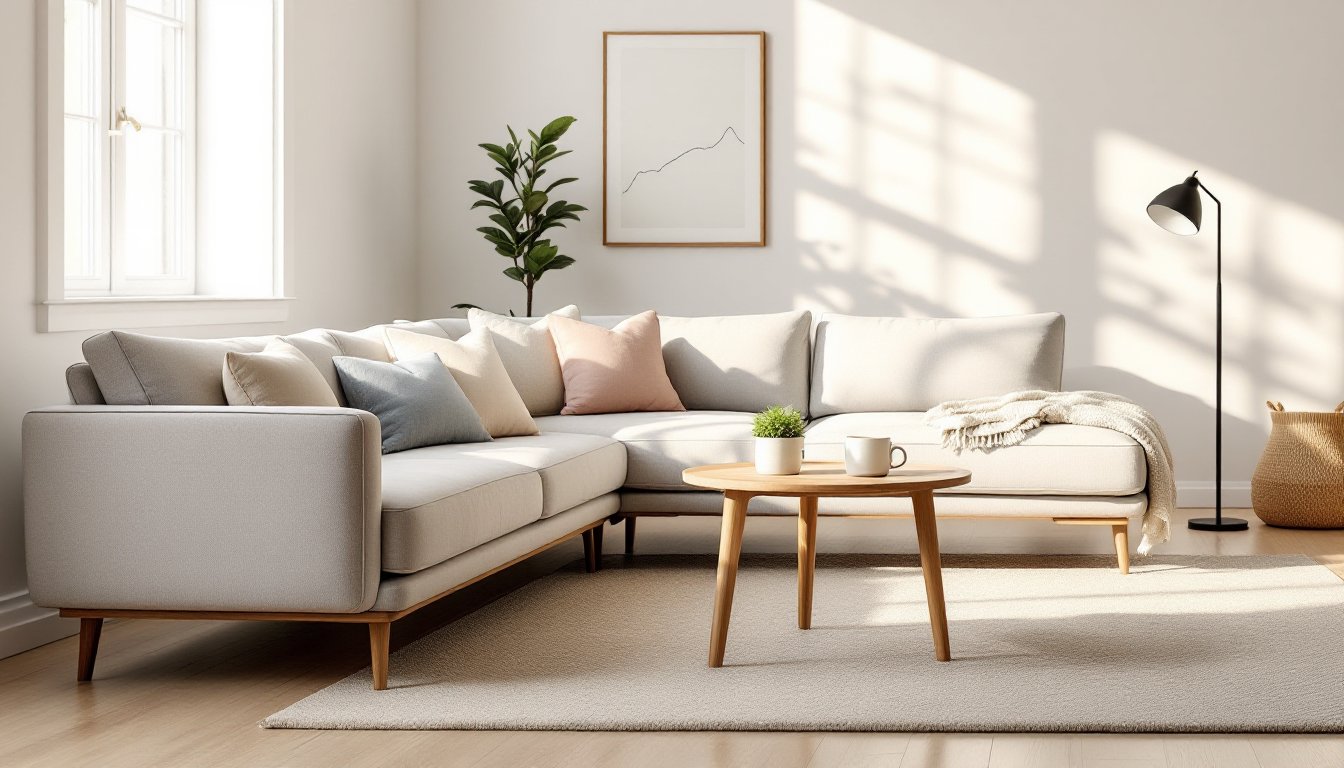
Choose light or neutral upholstery. Soft grays, beiges, and light blues reflect more light and make the sectional feel less imposing. Dark colors (charcoal, navy) can work if you have high ceilings and good natural light, but they tend to shrink small rooms. Avoid large-scale patterns, solid fabrics or subtle textures (linen weaves, microfiber) read cleaner.
Layer with throw pillows and blankets, sparingly. Two or three pillows per seat is plenty. Overstuffing a sectional with a dozen pillows eats seating space and looks cluttered. Stick to one or two accent colors that tie into your rug or wall art. Keep blankets folded or draped over one arm, not piled everywhere.
Use a proportional area rug. The rug should extend at least 6 inches beyond each side of the sectional, or sit entirely underneath the front legs. A too-small rug makes the whole setup look cramped. In tight spaces, consider a large rug that defines the seating zone and visually expands the floor.
Add vertical elements. Hang artwork or shelving above the sectional to draw the eye up and balance the horizontal mass of the furniture. Floor lamps or tall plants in the corner opposite the chaise create symmetry and fill dead space without crowding walkways. Resources like Homedit offer layout inspiration for balancing large furniture in compact rooms.
Mind your coffee table size. In small spaces, the coffee table should be no more than two-thirds the length of the sectional’s longest side. Round or oval tables work better than sharp-cornered rectangles, they improve traffic flow and reduce shin-bumping. Nesting tables or a space-saving coffee table with a lift-top offers flexibility when you need extra surface area.
Lighting matters. Overhead lighting alone can make a sectional feel heavy. Add task lighting (a floor lamp behind the chaise, a table lamp on a side table) to brighten corners and create depth. Dimmable LEDs let you adjust ambiance for movie nights or reading.
If you’re working with a tiny apartment layout, consider dual-purpose decor, like a side table that doubles as a laptop desk or a storage ottoman that acts as a coffee table. Every piece should earn its place.
Conclusion
A small space sectional isn’t a compromise, it’s often the smartest seating choice for tight layouts. Prioritize modular configurations, measure twice, and focus on multi-functional features like storage or sleeper mechanisms. Style it with light colors, proportional rugs, and minimal accessories, and you’ll end up with a living room that’s comfortable, flexible, and genuinely livable.