Table of Contents
ToggleFinding furniture that earns its floor space is critical in compact homes. A small space sleeper sofa solves two problems at once: daytime seating and overnight guest accommodations, all without requiring a dedicated guest room. But not all sleeper sofas are created equal, especially when square footage is tight. The wrong choice can overwhelm a room, offer poor sleep quality, or become a hassle to operate. This guide walks through the essential features, sizing strategies, and placement tactics that make a sleeper sofa a smart addition to studios, one-bedrooms, and multipurpose rooms.
Key Takeaways
- A small space sleeper sofa solves dual functionality by providing daily seating and guest accommodations without requiring a dedicated room, making it ideal for studios and one-bedroom homes.
- Choose sleeper sofas 72–78 inches wide with track arms and mechanisms requiring only 36–48 inches of clearance; click-clack designs need just 10 inches and work best against walls.
- Memory foam or gel-infused mattresses (5–6 inches thick) significantly outperform standard innerspring options by resisting compression, improving sleep quality, and making mechanisms easier to operate.
- Calculate the deployed bed’s total floor footprint using mattress length plus sofa depth (typically 80 × 60 inches for a queen sleeper) before purchasing to ensure it fits your room layout.
- Maximize functionality with floating placement, area rugs, modular furniture on casters, and wall-mounted storage to keep the space flexible and visually cohesive in both sofa and bed modes.
- Prioritize quality steel frames, smooth single-hand operation, and removable washable upholstery to ensure durability and longevity through repeated conversions.
What Makes a Sleeper Sofa Ideal for Small Spaces?
A sleeper sofa earns its place in a small home by doing double duty without doubling your furniture footprint. Unlike a dedicated guest bed that sits unused most of the year, a compact sleeper provides daily seating and converts when needed.
Scale matters most. Standard sleeper sofas run 84–90 inches wide, which is overkill for tight spaces. Models designed for small rooms typically measure 72–78 inches wide with queen or twin mattresses rather than full-size. Some loveseats with pull-out twin mattresses clock in at just 60–66 inches, fitting in alcoves or studio corners where a full sofa won’t.
Clearance requirements separate good designs from space hogs. A sleeper needs room to deploy, most mechanisms require 36–48 inches of clearance in front of the sofa when opened. Measure this distance from the front edge of your sofa to the nearest obstacle (coffee table, wall, opposite furniture). If you’re working with less than 40 inches, look for click-clack or fold-down designs that unfold forward rather than pull out.
Arm style affects usable width. Track arms (straight, narrow profiles) save 4–6 inches compared to rolled or English arms. In a 10×12 room, those inches determine whether you can add a side table or floor lamp.
Prioritize models with storage underneath the seat or in the chaise. Bonus compartments hold bedding so you’re not hunting for sheets in a closet, especially valuable in homes with limited linen storage.
Key Features to Look for in Compact Sleeper Sofas
Choosing a sleeper sofa goes beyond aesthetics. Mechanism quality, mattress type, and frame construction determine whether the piece becomes a go-to solution or a regret purchase.
Space-Saving Mechanisms and Folding Styles
The traditional pull-out mechanism (a metal frame that unfolds from beneath the seat cushions) is durable but bulky. It requires the most clearance and adds weight. Modern alternatives include:
Click-clack or futon-style: The backrest folds flat to form a sleeping surface. No pull-out required, so clearance needs drop to around 10 inches. Best for studios where the sofa sits against a wall. The seam down the middle can be uncomfortable for some sleepers.
Slide-out platform: The seat cushions slide forward, and the back cushions drop to form a flat surface. Popular in European designs, these work well in narrow rooms. The sleep surface tends to be firmer since there’s no separate mattress.
Folding mattress inside: A tri-fold or bi-fold mattress lives inside the sofa and unfolds on top of the frame. This style, often seen in sectional sleepers, keeps the footprint tight and doesn’t require pulling anything out from under the seat. Many integrated furniture designs use this approach to combine seating, sleeping, and storage.
Pull-out ottoman or chaise: Some modular designs hide a twin mattress in an ottoman that doubles as a footrest. It’s a clever workaround for spaces too small for a full sleeper sofa.
When testing mechanisms, open and close the bed yourself. Cheap designs bind, pinch fingers, or require two people. Quality mechanisms operate smoothly with one hand. Look for steel frames over particleboard supports, they’ll outlast dozens of conversions.
Mattress Quality and Comfort Considerations
Most complaints about sleeper sofas center on mattress quality. Traditional innerspring mattresses in sleepers are 4–5 inches thick, which is half the depth of a standard mattress. They sag quickly and offer minimal support.
Memory foam and gel-infused foam mattresses (5–6 inches thick) provide better contouring and hold up longer. They’re lighter, making the mechanism easier to operate. High-density foam (at least 2.5–3 lbs per cubic foot) resists compression better than bargain foam.
Air mattresses built into some sleeper frames allow firmness adjustment but are prone to leaks and require a pump. They’re not ideal for frequent use.
If possible, lie on the deployed bed for at least five minutes. Your hips and shoulders shouldn’t bottom out against the frame. For guests staying multiple nights, pair a thinner mattress with a memory foam topper (2–3 inches) that you store separately, it dramatically improves sleep quality without permanently increasing the sofa’s depth.
How to Choose the Right Size for Your Room
Start with a floor plan, even a rough sketch. Measure your room’s usable dimensions, accounting for door swings, radiators, and traffic paths.
Sofa width: In a 10×10 or 10×12 room, a loveseat sleeper (60–72 inches) usually fits better than a full sofa. In a 12×14 or larger space, a 78-inch sofa works if placed correctly. Leave at least 30–36 inches of walking space on at least one side.
Deployed bed length: Queen mattresses on sleepers measure approximately 80 inches long when opened. Twin mattresses run around 75 inches. Add the sofa depth (typically 36–40 inches) to this number to calculate total floor coverage when the bed is out. A queen sleeper in sleep mode can consume 80 inches deep × 60 inches wide of floor space, nearly half a 10×12 room.
Ceiling and window placement: Don’t block windows or radiators when the bed deploys. If your only logical sofa wall has a window, measure whether the opened bed will cover it. Same goes for floor vents and baseboard heaters.
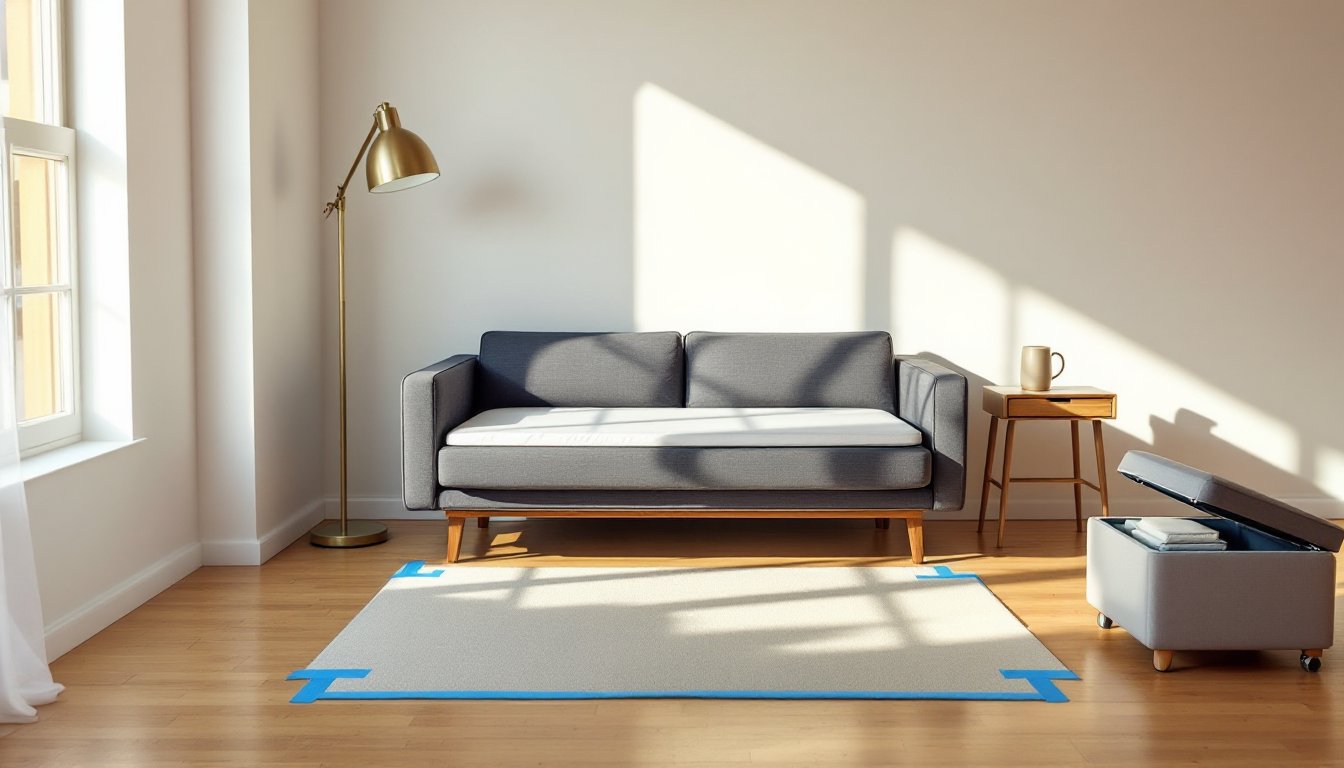
Test with painter’s tape. Mark the sofa’s footprint on the floor, then mark the deployed bed’s footprint. Walk around it. Can you open closet doors? Access outlets? This low-tech trick prevents costly mistakes.
For <a href="https://hearthdreamworld.com/tiny-apartment-ideas/”>tiny apartment ideas, consider a twin sleeper loveseat paired with a modular ottoman. Two smaller pieces offer more layout flexibility than one large sofa.
Doorway clearance: Measure your front door, hallway width, and any turns. Sleeper sofas are heavy, some models exceed 150–200 lbs, and many won’t fit through a standard 32-inch doorway without removing legs or backs. Ask the retailer about disassembly options before purchase.
Styling and Placement Tips for Maximum Functionality
A sleeper sofa should look intentional, not like you crammed it in as an afterthought. Thoughtful placement and styling make the room feel cohesive even when the bed’s deployed.
Float the sofa a few inches from the wall if the room allows. This creates visual breathing room and prevents the back fabric from rubbing against paint or wallpaper. It also makes bedding tucking easier when the mattress is out.
Anchor with a rug. A 5×7 or 6×9 area rug under the sofa (in sofa mode) defines the seating zone and keeps the piece from feeling adrift. Make sure the rug extends at least 6 inches beyond the sofa’s front edge. When the bed deploys, the rug will partially slide under, choose a low-pile or flatweave that won’t bunch.
Keep a clear path to the pull-out mechanism. Space-saving coffee tables on casters or nesting tables let you quickly shift furniture when converting to bed mode. Avoid heavy, fixed-position coffee tables that become obstacles.
Install task lighting on the wall or use a narrow floor lamp instead of table lamps on bulky end tables. In small rooms, vertical lighting frees up surface area. Swing-arm sconces mounted 60 inches from the floor work for reading in both sofa and bed configurations.
Choose slipcovers or washable upholstery. Sleeper sofas get more wear than standard sofas due to the conversion process. Performance fabrics (polyester blends treated for stain resistance) or removable, machine-washable covers extend the life of the piece. Design sites like Houzz showcase hundreds of compact sleeper arrangements with durable fabric choices.
Pair with multifunctional furniture. A space-saving sofa often works best alongside modular shelving that holds books, plants, and guest bedding. Wall-mounted shelves above the sofa keep the floor clear while adding storage. Avoid overstuffing the room, less furniture, chosen carefully, makes small spaces feel larger.
Create zones with color. Paint the sofa wall a shade darker than adjacent walls to create a subtle accent. This draws the eye and frames the seating area without requiring additional furniture. Keep throw pillows minimal, two or three at most. Oversized pillow arrangements look cluttered in compact rooms and need somewhere to go when the bed deploys.
Plan for bedding storage. A storage ottoman, a bench with a lift-top, or even a space-saving bed frame in another room can hold sheets and a spare blanket. Bedding left on the sofa during the day adds visual clutter. If the sleeper has built-in storage, use vacuum bags to compress linens and maximize the compartment.
Residents of tight quarters often combine sleeper sofas with other flexible furniture. Space-saving tables that fold or expand let you host dinner and then convert the room for overnight guests. The key is choosing pieces that transition smoothly between functions.
For safety, ensure the deployed bed doesn’t block exits or trip hazards. Building codes (typically IRC Chapter 3 for habitable rooms) require egress paths and clearances, especially in basement or attic conversions. If the sleeper will be used in a space that doubles as a legal bedroom, confirm it meets minimum square footage and window requirements for your jurisdiction.
Conclusion
A well-chosen sleeper sofa transforms how a small home functions, offering flexibility without sacrificing livability. Focus on mechanism quality, realistic sizing, and furniture that complements rather than competes for space. Measure twice, test in person when possible, and plan the room layout with both modes in mind. The result is a multipurpose space that handles daily life and overnight guests with equal ease.