Table of Contents
ToggleCramming a full-size sofa into a tiny living room is like trying to park an SUV in a compact car space, it might fit, but you’ll regret it every time you walk past. The right small space sofa transforms a cramped room into a functional, comfortable zone where you can actually move around and breathe. Skip the oversized furniture showroom fantasies and focus on proportions, versatility, and smart design. This guide cuts through the marketing noise to help you choose, position, and style a sofa that fits your space and your life.
Key Takeaways
- A small space sofa should measure 72–84 inches wide and 30–34 inches deep to balance seating capacity with spatial efficiency in rooms under 150 square feet.
- Choose sofas with exposed legs (4–6 inches high), low or armless designs, and light-scale frames to create visual space and prevent the room from feeling cramped.
- Apartment sofas (72–78 inches) and loveseats (50–64 inches) are ideal alternatives to full-size models, providing comfortable seating without overwhelming compact living rooms.
- Float your small space sofa 12–18 inches from the wall and maintain at least 18 inches of clearance around it for comfortable traffic flow and visual depth.
- Light upholstery colors, exposed legs, and minimal accessories make small living rooms feel larger, while dual-purpose features like storage or pull-out beds maximize functionality.
- Use multifunctional furniture, transparent secondary pieces, and strategic rug placement to anchor the seating area without sacrificing floor space or visual openness.
Why Choosing the Right Sofa Matters in a Small Living Room
Scale is everything. A sofa that dominates the room kills circulation, blocks natural light, and makes the space feel even smaller than it is. In rooms under 150 square feet, every piece of furniture needs to justify its footprint.
The right sofa creates visual balance without overwhelming the room. It anchors the seating area while leaving breathing room for pathways, coffee tables, and other essentials. Too large, and you’re left navigating around furniture like an obstacle course. Too small, and the room feels underfurnished and awkward.
Proportions also affect comfort. A deep sofa (36+ inches) might be luxurious in a spacious family room, but in a compact living room it eats up floor space and forces awkward furniture arrangements. Standard apartment sofas typically measure 72–84 inches wide and 30–34 inches deep, dimensions that balance seating capacity with spatial efficiency.
Functionality matters just as much as size. A sofa with hidden storage, a pull-out bed, or modular components adapts to changing needs without requiring a complete furniture overhaul. Many small integrated furniture solutions incorporate dual-purpose design to maximize utility in tight quarters.
Key Features to Look for in a Small Space Sofa
Start with measurements. Measure your room’s dimensions, doorways, hallways, and stairwells before you shop. A sofa that fits on the showroom floor might not fit through your third-floor walk-up. Note the actual depth (front to back including cushions) and overall width (arm to arm). Leave at least 18 inches of clearance around the sofa for comfortable traffic flow.
Look for exposed legs instead of skirted bases. Sofas with visible legs create visual space underneath, making the room feel less crowded. Legs that are 4–6 inches high work best, tall enough to see through, short enough to maintain stability.
Armless or low-arm designs reduce bulk without sacrificing seating. Track arms (straight, modern profiles) take up less space than rolled or English arms. Some designs feature one arm and one open side, offering flexible seating configurations.
Light-scale frames and slim profiles matter. Avoid chunky frames and oversized cushions. A sofa with a narrower back and thinner seat cushions can feel just as comfortable while consuming 6–8 inches less depth.
Consider dual-purpose features:
- Sleeper mechanisms (pull-out or click-clack designs) turn the sofa into a guest bed
- Built-in storage under seat cushions or in chaise compartments
- Reversible or removable components for flexible layouts
Upholstery choice impacts maintenance and visual weight. Lighter colors (grays, taupes, soft blues) reflect light and feel less imposing. Durable fabrics like microfiber, performance linen, or tight-weave polyester blends resist wear and clean more easily than velvet or chenille.
According to Homedit, sofas with clean lines and minimal detailing complement small spaces better than heavily tufted or ornate designs that add visual clutter.
Best Sofa Styles for Compact Living Rooms
Loveseats and Apartment Sofas
Loveseats (50–64 inches wide) seat two comfortably and fit rooms where a full-size sofa overwhelms. They work well in studio apartments, den areas, or as secondary seating in multipurpose rooms. Pair a loveseat with an accent chair or ottoman to create flexible seating without blocking sightlines.
Apartment sofas (72–78 inches wide) split the difference between loveseats and standard sofas. They seat three people without the bulk of traditional 84–96 inch models. This size suits most small living rooms (10×12 feet or smaller) and leaves room for a space-saving coffee table or side tables.
English roll-arm sofas in apartment scale offer traditional styling with compact proportions. Look for versions with tighter backs and shallower seats (30–32 inches deep) to save space.
Mid-century modern designs feature tapered legs, slim arms, and streamlined silhouettes that feel airy and unobtrusive. The elevated base creates visual lightness, and clean lines pair with nearly any decor style.
Sectionals and Modular Options
Sectionals might seem counterintuitive for small spaces, but the right configuration maximizes seating in awkward layouts. A compact L-shaped sectional tucks into a corner, freeing up the center of the room. Choose versions with a chaise that’s 60 inches or shorter to avoid overwhelming the space.
Modular sofas consist of individual seats, corners, and armless units that you can rearrange or separate. Rearrange modules when you move, add pieces as your space grows, or break them apart for flexible seating. This adaptability suits renters or anyone who anticipates layout changes.
Reversible chaise sectionals let you swap the chaise from left to right, adapting to different room configurations without buying new furniture. This feature proves useful if you move or rearrange frequently.
Small-scale sectionals (total length under 90 inches) fit better than full-size versions. Skip oversized cushions and deep seats, 28–32 inches of depth provides comfort without eating floor space.
Some space-saving furniture systems incorporate sectionals with hidden storage or fold-out beds, combining seating, sleeping, and storage in one footprint. These work well in studio apartments or rooms that serve multiple functions.
Resources like Apartment Therapy showcase real-world examples of sectionals in compact living rooms, offering practical ideas for layouts and styling.
Smart Placement and Layout Tips to Maximize Your Space
Float the sofa instead of pushing it against the wall. Pulling the sofa 12–18 inches away from the wall creates a sense of depth and allows for a console table or narrow shelving behind it. This setup works especially well in rectangular rooms where you need to define separate zones.
Anchor the sofa perpendicular to the longest wall in narrow rooms. This arrangement breaks up the bowling-alley effect and creates better traffic flow. Leave at least 30 inches between the sofa and opposite wall for comfortable passage.
In square rooms, center the sofa facing the focal point (fireplace, window, or media console). Position accent chairs or space-saving tables at angles to create conversational seating without blocking pathways.
Use the corner diagonal if your layout allows. Angling a sofa or sectional across a corner opens up adjacent walls for storage or secondary seating. This works best in rooms at least 12×12 feet.
Define zones with rugs. A rug that fits entirely under the sofa and coffee table (at least 5×7 feet for small spaces) anchors the seating area and visually separates it from dining or work zones.
Mind the clearances:
- 14–18 inches between sofa and coffee table (enough to navigate without kicking shins)
- 36 inches minimum for main walkways
- 24 inches for secondary pathways
Skip the matching furniture set. A sofa paired with mismatched accent chairs or poufs creates visual interest and allows you to fit pieces into odd corners or niches.
Measure twice, move once. Use painter’s tape to outline the sofa’s footprint on the floor before you buy. Walk through the space to ensure the layout doesn’t block doors, windows, or high-traffic routes.
Design Tricks to Make Your Small Living Room Feel Larger
Light-colored upholstery reflects natural light and makes the sofa feel less imposing. Whites, creams, light grays, and soft pastels visually recede, while dark colors (navy, charcoal, forest green) can feel heavy in small spaces. If you prefer bold color, use it on accent pillows or throws instead of the entire sofa.
Match the sofa to the wall color for a cohesive, seamless look. A sofa that blends with the background reduces visual clutter and lets the eye travel across the room without interruption.
Use vertical lines to draw the eye upward. Tall, narrow bookcases or floor-to-ceiling curtains create the illusion of higher ceilings. Pair this with a low-profile sofa to emphasize vertical space.
Incorporate mirrors opposite or adjacent to the sofa. Mirrors bounce light around the room and create the perception of depth, making the space feel larger than it is.
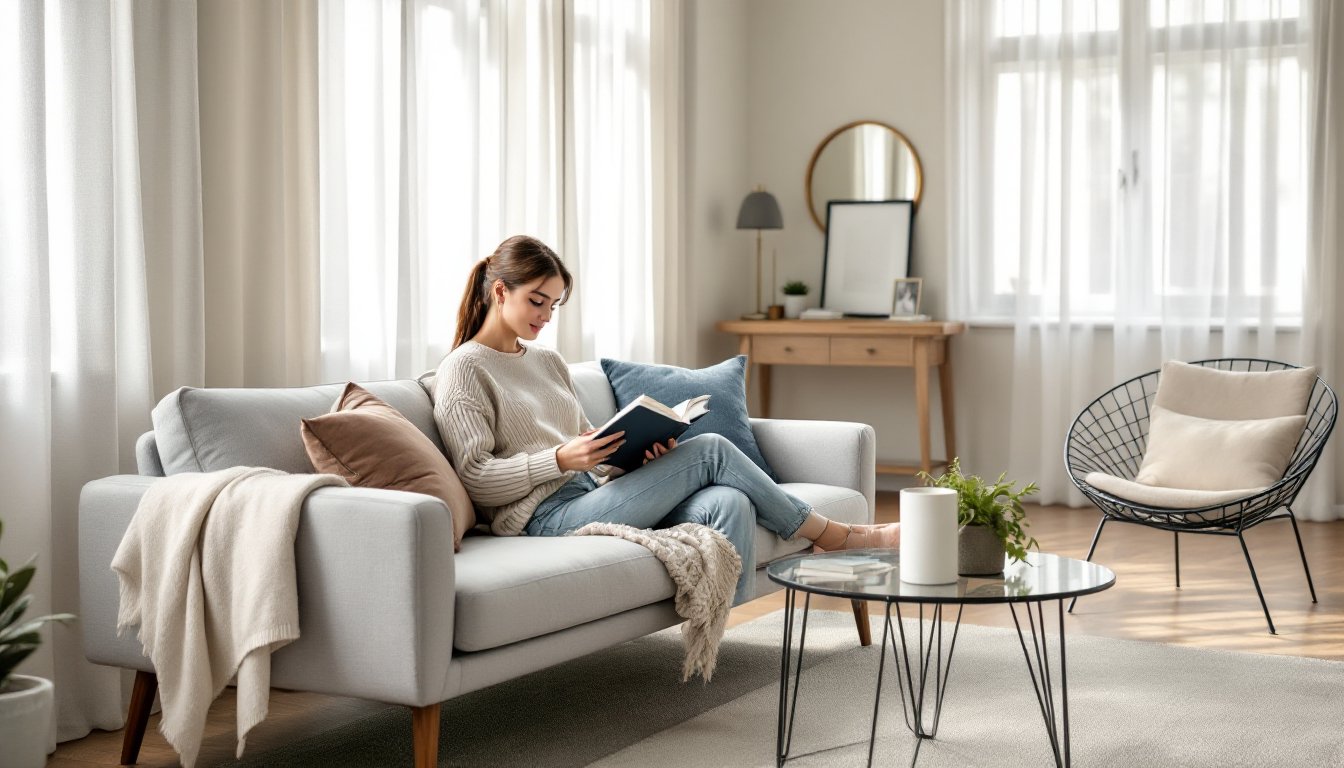
Choose transparent or minimal furniture for secondary pieces. Acrylic coffee tables, glass side tables, or wire-frame chairs don’t block sightlines, keeping the room feeling open. This strategy complements recommendations from IKEA Hackers, where creative furniture modifications often prioritize visual lightness.
Limit patterns and textures. A sofa in a solid color or subtle texture (linen, woven cotton) feels calmer and less busy than bold prints or heavily tufted designs. Save pattern for throw pillows, where you can swap them out easily.
Hang curtains high and wide. Mount curtain rods near the ceiling and extend them beyond the window frame. This trick makes windows (and the room) feel larger, adding visual height and light.
Declutter surfaces. A small room cluttered with knickknacks, excess pillows, and random decor feels chaotic. Keep the coffee table, end tables, and sofa styling minimal. Three throw pillows and one blanket are plenty.
Use multifunctional furniture beyond the sofa. Nesting tables, storage ottomans, and wall-mounted shelves reduce furniture footprint while maintaining functionality. Just as tiny apartment solutions rely on smart layering, your living room benefits from pieces that do double duty without taking up extra space.
Scale matters with accessories too. Oversized floor lamps or bulky end tables overwhelm a small sofa. Choose slim-profile lighting and compact side tables that fit the proportions of your seating.
With the right sofa, strategic placement, and a few design tricks, a small living room transforms from cramped to cozy. Focus on proportions, functionality, and visual lightness, and skip the impulse to cram in more furniture than the space can handle. The goal isn’t to fill every inch, but to create a room that feels comfortable, functional, and genuinely yours.